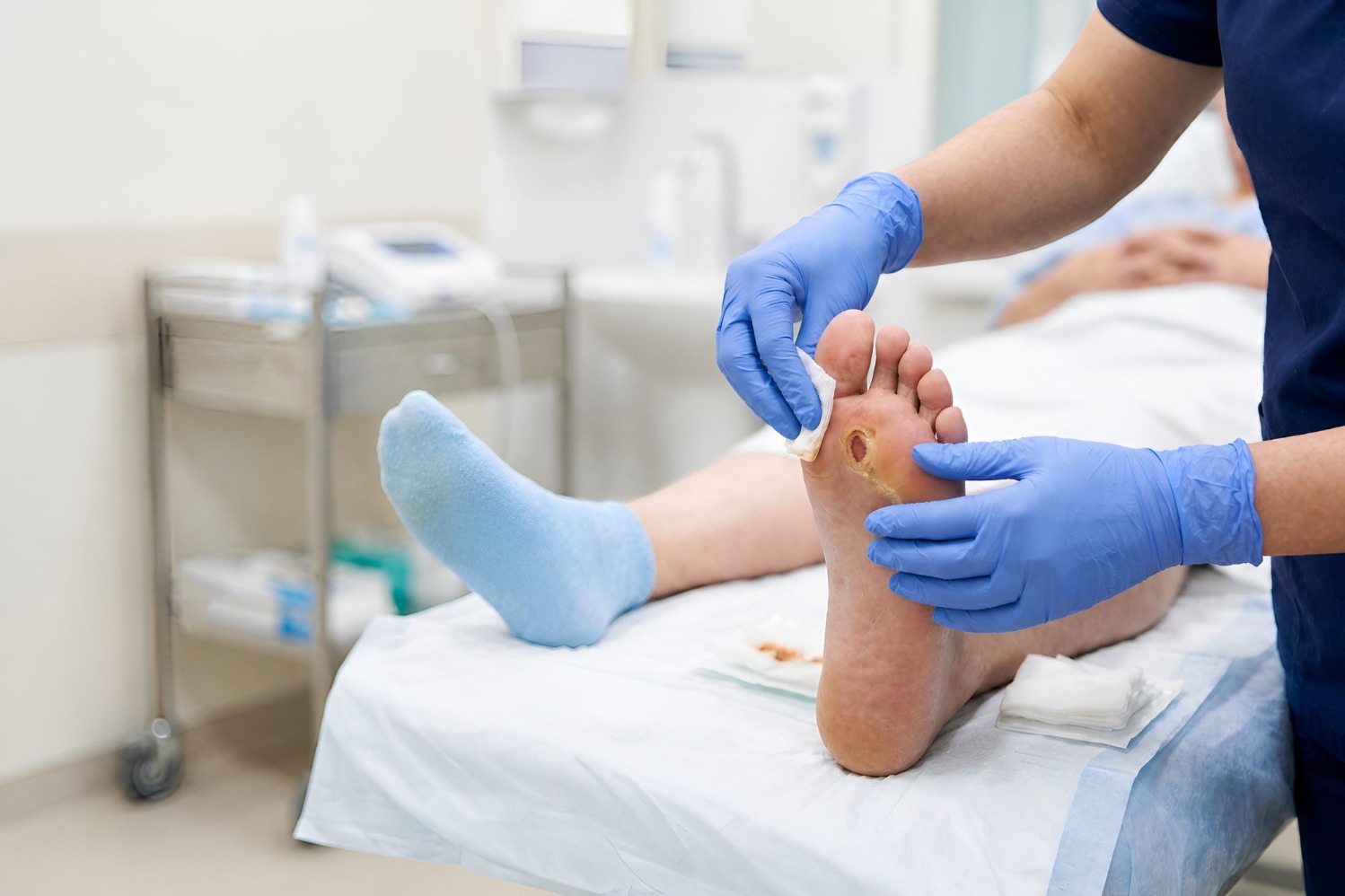
A small foot wound can become a significant problem in a person with diabetes, particularly when reduced sensation, poor circulation, infection, or delayed healing is present. Because diabetic foot complications can progress without severe early pain, regular inspection and timely assessment are important.
For people requiring evaluation for a diabetic foot in Nagpur, Dr Hemant Chhajed Surgeon can assess wounds that may need surgical care as part of a broader diabetes and wound-management plan.
Diabetes can affect the feet in several ways. Peripheral neuropathy may reduce the ability to feel pain, heat, pressure, or minor injury. Circulation problems can impair tissue healing. Elevated blood glucose can also complicate infection control and wound recovery.
Warning signs that deserve attention include:
- A wound that is not healing
- Redness or swelling around an ulcer
- Discharge or unpleasant odour
- Increasing warmth of the foot
- Darkening or discoloration of skin or toes
- New swelling
- Fever associated with an infected wound
- A wound that appears deeper than before
A diabetic foot assessment should look beyond the surface of the ulcer. Doctors may evaluate wound depth, infection, circulation, sensation, pressure points, blood glucose control, and possible involvement of deeper tissue or bone.
Treatment therefore varies considerably. Depending on the findings, management may involve wound cleaning and dressings, pressure off-loading, infection treatment, removal of unhealthy tissue, circulation assessment, blood glucose management, and surgery when clinically required.
One common mistake is repeatedly dressing a wound at home without identifying why it is failing to heal. Another is relying on pain as an indicator of severity. Neuropathy can mean that a serious wound causes surprisingly little discomfort.
Daily foot care can help identify problems early. People with diabetes should inspect the soles, heels, spaces between the toes, and areas exposed to shoe pressure. Walking barefoot should generally be avoided, particularly when sensation is reduced.
Footwear should fit appropriately and should be checked for rough edges or foreign objects before use. Nails and calluses also require careful management, especially in people with neuropathy or circulation problems.
In Nagpur and across Maharashtra, diabetic foot care may require coordination between surgical wound management and ongoing diabetes control. The aim is to identify infection and tissue damage early and address factors interfering with healing.
An evaluation with Dr Hemant Chhajed Surgeon can help determine whether a diabetic foot wound requires routine wound care, further investigations, debridement, or another surgical intervention based on its current clinical condition.
Keywords