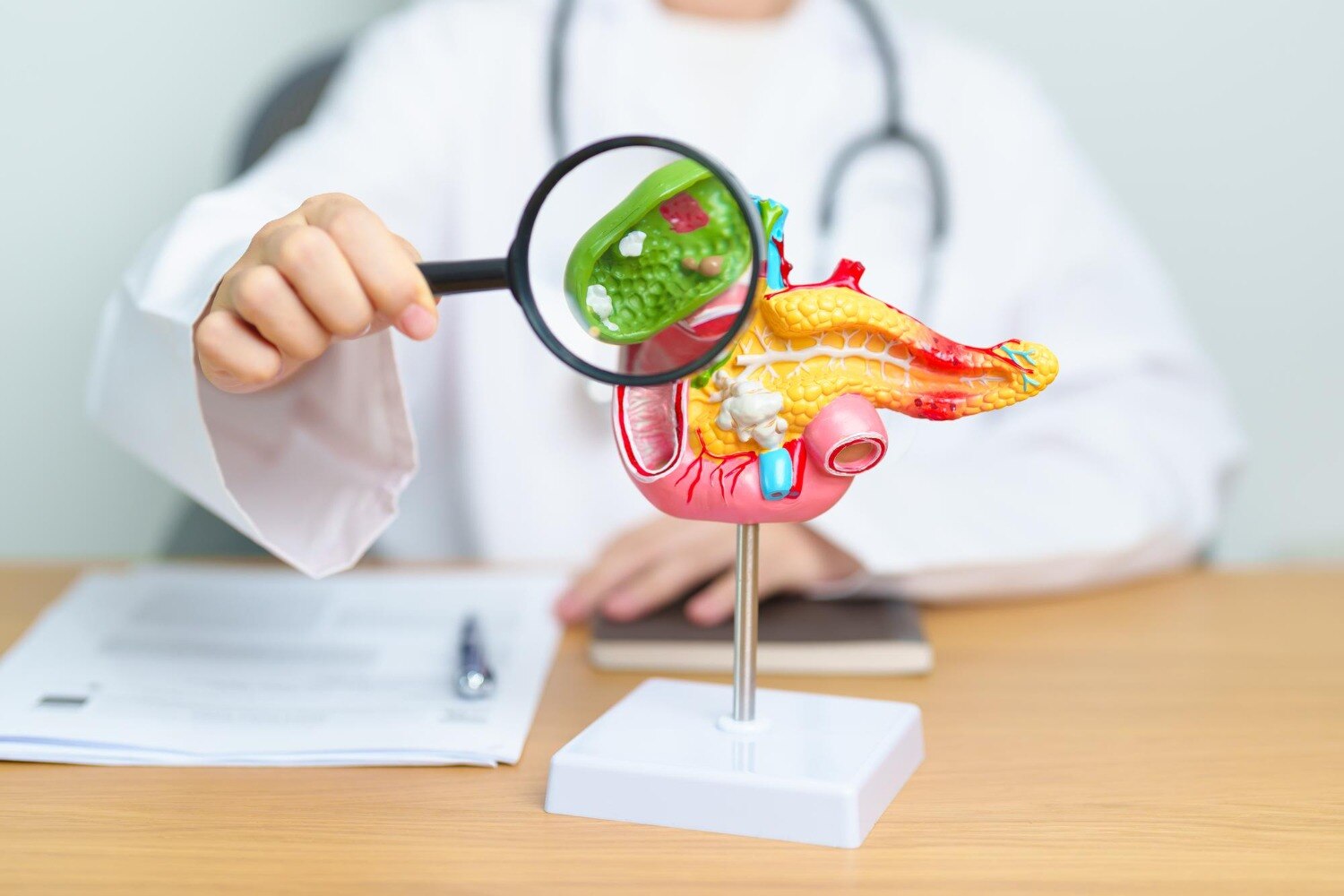
Upper GI endoscopy does not automatically come before gallbladder surgery. The correct order depends on whether your symptoms and test results point to the gallbladder, the stomach or oesophagus, or a blocked bile duct; by the end, you will know which findings justify endoscopy, surgery, urgent hospital care, or neither procedure as the first step.
Key takeaways
- Start with symptoms, examination, liver tests and a right-upper-quadrant ultrasound.
- Do upper GI endoscopy first when ulcer, gastritis or reflux could explain symptoms.
- Gallbladder surgery can proceed when stones cause symptoms without bile duct obstruction.
- Seek urgent care for jaundice, fever, severe pain or repeated vomiting.
Start with the diagnosis, not the procedure
The decision starts with the likely cause of the symptoms, not with a choice between procedures. Take a symptom history, examine the abdomen, order liver-function tests including bilirubin, AST, ALT, ALP and GGT, and perform a right-upper-quadrant ultrasound.
This establishes whether the pain fits gallbladder disease and whether a bile-duct problem or another diagnosis needs attention.
1. Proceed towards laparoscopic gallbladder removal when the pain is biliary in pattern, ultrasound shows relevant gallstones or inflammation, and liver tests do not suggest bile-duct obstruction.
2. Ask whether an upper GI endoscopy will answer a specific question and change treatment. Routine endoscopy before every gallbladder operation adds sedation and procedural risk, delays treatment, and can uncover mild gastritis or reflux that does not explain the pain.
3. Put endoscopy first when symptoms point to the stomach or oesophagus: persistent dyspepsia, suspected ulcer disease, reflux with alarm features, recurrent vomiting, black stools or vomiting blood, anaemia suggesting bleeding, progressive difficulty swallowing, weight loss, or pain that does not match the ultrasound findings.
4. Reconsider both procedures when gallstones appear incidental, the pain is atypical, or liver tests suggest a bile-duct stone. A gallbladder removal consultation should review symptoms, imaging, medicines such as anticoagulants, anaesthetic risks and the test result that would change the plan. A normal endoscopy does not rule out gallbladder pain.
When upper GI endoscopy should come before surgery
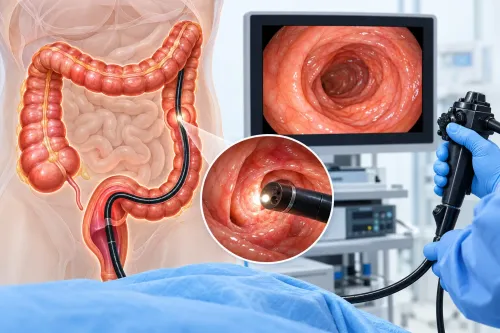
Upper GI endoscopy should come before gallbladder surgery when the symptoms or test results point to a problem in the oesophagus, stomach or duodenum. Persistent indigestion, reflux, recurrent vomiting, progressive difficulty swallowing, unexplained weight loss, black stools, vomiting blood or anaemia with suspected gastrointestinal bleeding all justify a specific endoscopy question before operating.
- Suspected peptic ulcer disease or gastritis that could explain the pain
- Upper-GI bleeding, iron-deficiency anaemia or black, tarry stools
- Progressive swallowing difficulty, food sticking or painful swallowing
- Recurrent vomiting, persistent dyspepsia or weight loss
- Symptoms that do not match the right-upper-quadrant ultrasound findings
- Pain continuing despite treatment for a suspected gallbladder cause
| Finding | What endoscopy can answer | Effect on the sequence |
|---|---|---|
| Ultrasound shows gallstones, but symptoms are mainly reflux or indigestion | Whether an ulcer, oesophagitis or another upper-GI lesion explains the symptoms | Endoscopy may come first |
| Anaemia, black stools or vomiting blood | Whether there is an ulcer, bleeding lesion or upper-GI tumour | Endoscopy takes priority |
| Typical biliary pain with uncomplicated gallstones and no alarm features | Endoscopy is unlikely to change the diagnosis | Laparoscopic gallbladder surgery can proceed |
| Mild gastritis or reflux found on endoscopy | Whether an upper-GI abnormality exists, not whether it causes all pain | Correlate the result with examination and imaging |
A normal endoscopy does not rule out gallbladder pain, and mild gastritis does not prove it caused the symptoms. Ask, before scheduling upper GI endoscopy in Nagpur, what treatment decision the result will change; routine endoscopy before every gallbladder operation can add sedation, delay and incidental findings.
When gallbladder surgery can proceed, and when the bile duct changes the plan
Confirmed symptomatic gallstones can proceed to elective laparoscopic gallbladder removal when the pain pattern fits biliary colic, ultrasound shows stones or gallbladder inflammation, and bilirubin and liver enzymes do not suggest a blocked common bile duct. Upper GI endoscopy is not a routine gate before surgery.
Choose endoscopy first when the symptoms point more strongly to the stomach or oesophagus, or when the ultrasound does not explain them. Relevant triggers include:
- Persistent dyspepsia or reflux despite treatment
- Suspected peptic ulcer disease or gastritis
- Recurrent vomiting
- Vomiting blood, black stools, or anaemia suggesting upper-GI bleeding
- Progressive difficulty swallowing or unexplained weight loss
A suspected common bile duct stone changes the sequence. Abnormal bilirubin, ALP, GGT, AST or ALT, a widened duct on ultrasound, jaundice, or a visible duct stone calls for risk assessment rather than automatic ERCP.
Intermediate-risk findings usually lead to MRCP or endoscopic ultrasound first; ERCP is used when the likelihood is high or a stone needs removal.
A confirmed duct stone can be managed by ERCP followed by surgery, surgical duct clearance during laparoscopic removal, or a coordinated single-stage approach. The choice depends on imaging, clinical stability, available expertise and duct-clearance capability.
When comparing gallbladder surgery in Nagpur, ask whether the service can arrange ultrasound, liver tests, anaesthesia, emergency surgical support and MRCP, EUS or ERCP when the bile duct changes the plan.
Urgent symptoms change the order completely
Severe or rapidly worsening symptoms require urgent assessment, not a routine endoscopy appointment or elective operation date. Go to an emergency department for:
- Severe or constant right-upper-abdominal or upper-abdominal pain, especially with a rigid abdomen
- Fever, chills, or marked tenderness with pain
- Yellow skin or eyes, dark urine, or pale stools
- Repeated vomiting or inability to keep fluids down
- Vomiting blood, black tarry stools, fainting, confusion, or extreme weakness
- Chest pain, breathlessness, or a fast deterioration
| Warning sign | Why it matters | What may come next |
|---|---|---|
| Severe pain with fever | Acute cholecystitis or another abdominal infection | Blood tests, ultrasound, antibiotics, and early laparoscopic cholecystectomy if you are fit |
| Pain with jaundice | A blocked or infected bile duct is possible | Urgent imaging and, when indicated, ERCP to drain the duct |
| Black stools or bloody vomit | Upper-GI bleeding requires immediate treatment | Resuscitation, blood tests, and urgent upper GI endoscopy |
| Persistent vomiting or confusion | Dehydration, obstruction, sepsis, or another serious illness may be developing | Hospital assessment rather than scheduled testing |
Do not delay urgent care to arrange a routine upper GI endoscopy. If you are unstable or too high-risk for immediate surgery, doctors may begin antibiotics, provide fluids, drain the gallbladder, or treat the bile duct before planning definitive surgery.
How to choose the right consultation and linked services
Compare the pathway, not just the procedure: a provider for upper GI endoscopy or gallbladder surgery in Nagpur should explain what question each test answers and what happens if the result changes treatment. A normal endoscopy does not exclude gallbladder pain, while mild gastritis does not prove that it causes your symptoms.
Ask these questions before booking:
- Does my examination, liver tests, bilirubin, AST, ALT, ALP and GGT, and right-upper-quadrant ultrasound support gallbladder disease?
- What specific finding will the upper GI endoscopy investigate, and will its result change treatment?
- Is high-quality ultrasound available, and who reviews abnormal results?
- If imaging suggests a bile-duct stone, can you arrange MRCP or ERCP and explain whether the duct will be cleared before or during surgery?
- Are anaesthesia, emergency surgical care and hospital admission available at the same facility?
- During a gallbladder removal consultation, how will you manage a retained bile-duct stone?
Dr Hemant Chhajed Surgeon can help coordinate the surgical decision with these investigations rather than treating an incidental scan finding as the diagnosis.
| Option | Choose it when | Verify |
|---|---|---|
| Upper GI endoscopy | Reflux, ulcer symptoms, bleeding, anaemia, vomiting, swallowing difficulty or mismatched ultrasound findings | Sedation, biopsy capability and result follow-up |
| Gallbladder removal | Biliary-type pain matches examination and imaging | Anaesthesia, laparoscopic expertise and bile-duct plan |
| Neither first | Severe pain, jaundice, fever or instability needs urgent assessment | Emergency imaging, laboratory testing and surgical support |
Related service
Expertise ₹500 Several conditions can cause problems in your gallbladder. The most common condition is gallstones. View service → |
Frequently asked questions
Should upper GI endoscopy or gallbladder surgery come first?
Start with the likely cause. Your clinician may order symptom assessment, abdominal examination, bilirubin, AST, ALT, ALP and GGT tests, plus a right-upper-quadrant ultrasound before choosing either procedure.
When should upper GI endoscopy come before gallbladder surgery?
Endoscopy should come first when symptoms suggest peptic ulcer disease, gastritis, reflux, oesophageal disease or another upper digestive cause that could explain the pain.
When can gallbladder surgery proceed without endoscopy?
Surgery can proceed when symptoms and ultrasound findings support symptomatic gallstones, liver tests do not suggest bile duct obstruction, and no upper digestive diagnosis needs investigation first.
How does a bile duct problem change the treatment plan?
Jaundice, abnormal bilirubin or cholestatic enzymes, a widened bile duct, or a suspected common bile duct stone can require further imaging or bile duct treatment before or alongside gallbladder removal.
Which symptoms require urgent assessment?
Seek urgent medical care for severe or persistent right-upper-abdominal pain, fever with chills, yellow skin or eyes, confusion, fainting, or repeated vomiting.
Keywords