An umbilical hernia alone does not usually create a reason for colonoscopy. The decision depends on the lower-GI problem being investigated, the hernia’s condition, your medical risks and whether preparation, sedation or a planned hernia operation changes the safest timing.
Key takeaways
- A hernia alone is not a lower GI endoscopy indication.
- Urgent bleeding, anaemia or bowel symptoms need separate assessment.
- Report obstruction symptoms before arranging bowel preparation.
- Coordinate endoscopy timing with any planned hernia operation.
Which lower-GI problems justify endoscopy when you have a hernia?
An umbilical hernia alone does not usually justify colonoscopy. In lower GI endoscopy with umbilical hernia, the reason for examining the bowel must stand independently from the abdominal-wall finding.
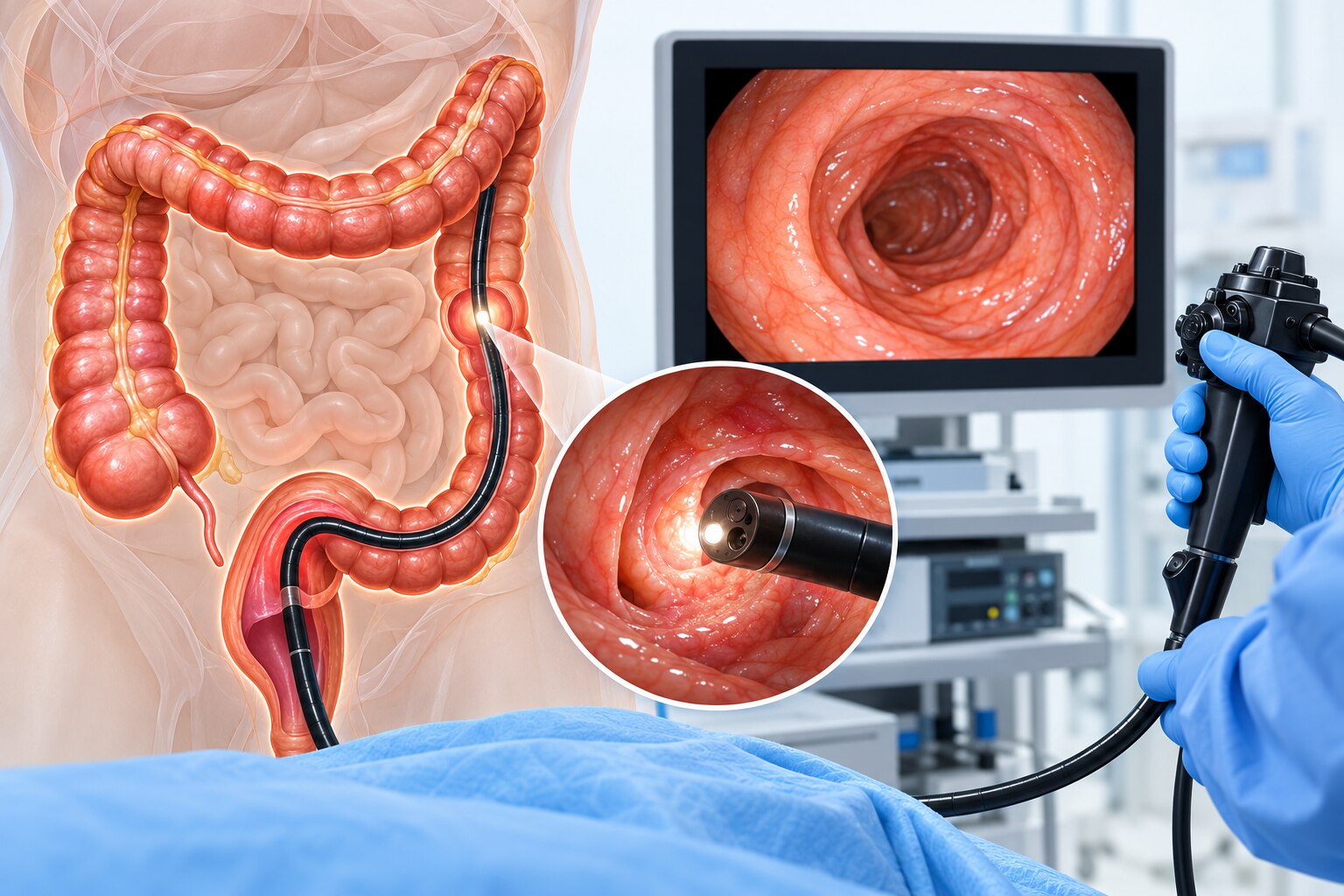
Lower GI endoscopy usually means colonoscopy: a flexible camera passes through the anus to inspect the rectum and colon. The clinician can take biopsies or remove polyps during the procedure.
| Test | What it examines or does | Key limitation |
|---|---|---|
| Colonoscopy | Directly views the rectum and colon; allows biopsy or polyp removal | Requires bowel preparation and may involve sedation |
| Upper-GI endoscopy | Examines the oesophagus, stomach and duodenum | Does not examine the colon |
| CT colonography | Uses CT images after bowel preparation to map the colon | Cannot remove a polyp during the scan |
| Abdominal ultrasound or CT | May assess the abdominal wall, obstruction or hernia contents | Is not a direct colon examination |
Recognised lower GI endoscopy indications include:
- Rectal bleeding
- Unexplained iron-deficiency anaemia
- Persistent change in bowel habit
- Suspected inflammatory bowel disease
- Unexplained weight loss with bowel symptoms
- A positive stool blood test
- Colorectal-cancer screening
- Surveillance after previous polyps or colorectal cancer
These lower GI endoscopy indications determine whether colonoscopy is appropriate; the hernia does not. A hernia is assessed separately through physical examination, with ultrasound or CT when its contents or anatomy are uncertain. A negative colonoscopy therefore does not replace hernia assessment or treatment planning.
When is endoscopy unsafe to arrange routinely?
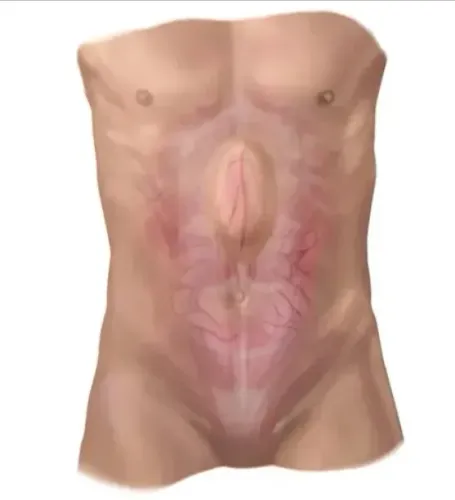
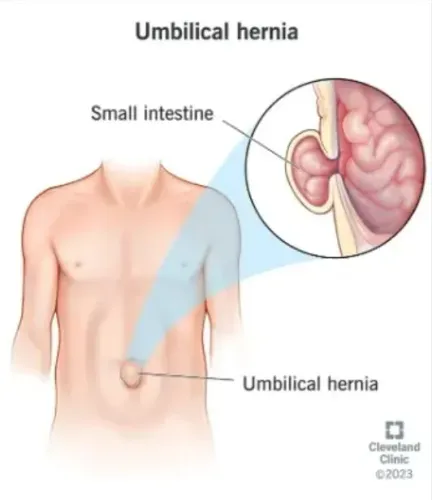
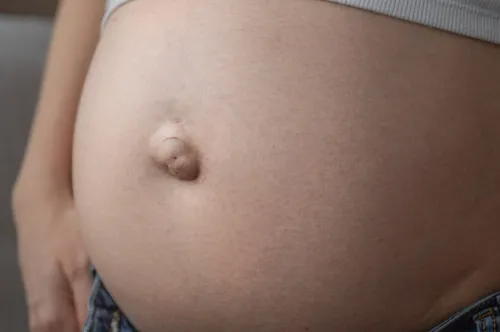
A routine colonoscopy is unsafe to arrange when an umbilical lump could contain trapped or compromised bowel. A small, painless bulge that reduces when you lie down or with gentle pressure is usually assessed differently from a fixed, painful swelling.
1. Check the hernia itself. Record whether it is small or large, reducible or fixed, tender or painless, and whether its size changes with standing, coughing or lying down. Ask about previous abdominal operations and mesh, which can alter the abdominal wall and nearby anatomy.
2. Stop the routine pathway for emergency symptoms. Sudden pain with a non-reducible lump, vomiting, abdominal distension, inability to pass stool or gas, fever, or purple, blue, black or increasingly red skin can indicate incarceration, bowel obstruction or strangulation. Seek urgent surgical assessment instead of booking routine outpatient lower-GI endoscopy.
3. Remember what the test does not do. The colonoscope travels through the anus, rectum and colon; it does not pass through, repair or confirm an umbilical hernia. Hernia diagnosis remains a physical-examination problem, supported by ultrasound or CT when the contents or anatomy are uncertain.
4. Tell the endoscopist about a large, painful or difficult-to-reduce hernia before lower gi endoscopy with umbilical hernia. Insufflated gas raises intra-abdominal pressure, while altered anatomy or hernia-related narrowing can affect the examination. A hernia alone does not make every colonoscopy unsafe, but it does require disclosure and appropriate surgical input.
How should you prepare when bowel preparation and medicines affect safety?
Bowel preparation causes repeated diarrhoea, cramping, straining and discomfort. Large-volume clear-fluid intake can still lead to dehydration or electrolyte disturbance, especially with kidney disease, heart failure, diabetes, frailty or medicines that alter fluid balance.
The endoscopy unit must give you the exact preparation, permitted fluid volume and fasting times. Do not use a generic online schedule. Ask for personalised instructions before you start, including what to do if vomiting, dizziness or very little urine develops.
Give the endoscopist and prescribing team every medicine’s name, dose, last-dose time and reason for use. Include:
- warfarin, apixaban, rivaroxaban or dabigatran
- aspirin or clopidogrel
- iron tablets, non-steroidal anti-inflammatory drugs and supplements
- diabetes medicines
Also report kidney disease and any previous bleeding. The reason for the lower GI endoscopy indications affects the plan, but so does what the colonoscopy might involve.
| Procedure type | Main issue | Instructions that differ |
|---|---|---|
| Diagnostic colonoscopy | Inspection, with no planned tissue removal | Medication changes may be limited |
| Colonoscopy with biopsy or polyp removal | Bleeding risk is higher | Anticoagulant and antiplatelet instructions need individual planning |
Never stop anticoagulants, antiplatelets or diabetes medicines based on generic advice. The plan depends on the planned intervention, kidney function, clotting risk and fasting; diabetes medicines need separate hypoglycaemia-prevention instructions.
Confirm the plan before bowel preparation. If a surgeon and endoscopist are involved, ask who coordinates it and record the agreed restart time, particularly after polypectomy.
How might a planned hernia operation change the timing?
There is no universal interval between colonoscopy and umbilical hernia repair. If bleeding, iron-deficiency anaemia, altered bowel habit, weight loss or another lower-GI concern requires colonoscopy, the surgeon and endoscopist may schedule it before repair, after recovery or as a separate procedure.
Do not delay an urgent hernia problem or a serious bowel concern for convenience. Combining procedures is not automatically safer: colonoscopy may involve biopsy or polypectomy and bowel contamination, while mesh repair places foreign material near the operative field. The convenience of one anaesthetic must be weighed against infection, anaesthetic and postoperative-management risks.
The plan also accounts for bowel preparation, wound healing and the proposed operation. During laparoscopic or robotic surgery, an umbilical defect can interfere with camera or trocar placement. The surgeon may avoid the defect, repair it during the operation or use open entry, based on the defect, adhesions, previous operations and planned procedure.
Before arranging umbilical hernia treatment in Nagpur, ask:
- Is the hernia reducible, and is imaging needed?
- Is mesh recommended, and where will the incision or ports be placed?
- Would a clinically necessary colonoscopy change the operation date?
- Who will coordinate bowel preparation, anaesthesia and recovery timing?
A negative colonoscopy does not replace hernia assessment or treatment planning. Confirm which concern takes priority and what symptoms require urgent review.
What should you confirm before booking care in Nagpur?
Before booking lower GI endoscopy in Nagpur, get one written plan from the endoscopy unit and one from the surgeon. Confirm who issues the bowel-preparation, clear-fluid and fasting instructions; whether sedation or anaesthesia is planned; and whether biopsy or polypectomy is anticipated.
| Situation | What to confirm | Action |
|---|---|---|
| Reducible, painless hernia | Timing, port or incision location, mesh plan | Proceed only after both teams agree |
| Painful or irreducible hernia | Access to urgent surgical assessment | Do not wait for an elective appointment |
| Sudden pain, vomiting, distension, no stool or gas, fever, or purple, blue or black skin | Emergency contact and hospital route | Seek emergency care for possible obstruction or strangulation |
Bring prior ultrasound or CT reports, operation notes, mesh details, the hernia’s recent changes, bowel symptoms, allergies, and a complete medicine list. Include each drug’s dose, last-dose time, purpose and the prescribing clinician’s contact details.
Ask the surgeon and endoscopist to name one coordinator for warfarin, apixaban, rivaroxaban, dabigatran, aspirin, clopidogrel, iron, anti-inflammatory drugs and diabetes medicines. Confirm the restart time, especially after polypectomy. Do not stop these medicines from online advice.
For umbilical hernia treatment in Nagpur, ask whether the hernia is reducible, whether imaging is needed, whether mesh is recommended, where ports or incisions will go, and how colonoscopy changes timing. Dr Hemant Chhajed Surgeon can provide surgical assessment of reducibility, obstruction, operative timing or repair options when a separate colonoscopy indication exists.
Frequently asked questions
Which lower-GI problems justify endoscopy when you have an umbilical hernia?
The indication must come from a bowel concern, such as rectal bleeding, unexplained iron-deficiency anaemia, a persistent change in bowel habit, or suspected colorectal disease—not from the hernia alone.
When is lower GI endoscopy unsafe to arrange routinely?
Do not arrange routine preparation before assessment if you have severe abdominal pain, repeated vomiting, marked swelling, inability to pass stool or gas, fever, or a painful hernia that cannot be pushed back. These symptoms can indicate obstruction or strangulation.
How should you prepare when bowel preparation and medicines affect safety?
Give the endoscopist and surgeon a complete medicine list, including anticoagulants, diabetes medicines, iron tablets and laxatives. Ask for personalised instructions about fluids, fasting, dose changes and whether bowel preparation is appropriate.
How might a planned hernia operation change the timing?
Your surgeon and endoscopist should agree whether the bowel examination comes before or after hernia repair. The decision depends on the urgency of the bowel indication, hernia symptoms, anaesthesia plans and recovery needs.
What should you confirm before booking lower GI endoscopy in Nagpur?
Confirm the reason for the examination, who will review your hernia, bowel-preparation instructions, medicine changes, sedation arrangements, emergency access and how findings will affect planned umbilical hernia treatment in Nagpur.
Keywords