
Tissue coming through the anus can represent full-thickness rectal prolapse, mucosal prolapse or prolapsed haemorrhoids, and the correct response depends on what the tissue looks like and how you feel. You will learn which signs require an emergency department, what an examination involves, and when to arrange rectal prolapse treatment without delay.
Key takeaways
- Seek emergency care for severe pain, bleeding, dark tissue, or an irreducible prolapse.
- A reducible prolapse still needs prompt assessment by a specialist.
- Doctors distinguish full-thickness from mucosal prolapse before choosing treatment.
- Choose a Nagpur surgeon who can assess and treat the underlying condition.
What is coming through the anus, and how urgent is the diagnosis?
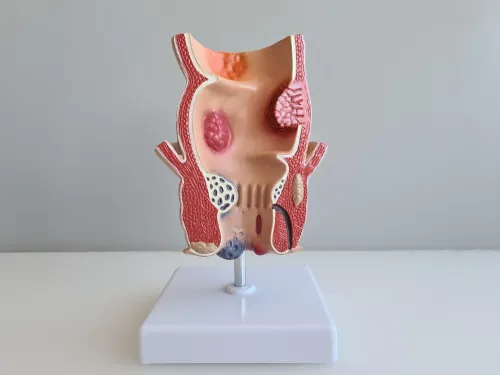
A visible, reducible prolapse usually needs prompt planned assessment, not an automatic emergency visit. Rectal prolapse means the rectal wall protrudes through the anus. Full-thickness prolapse is a larger, often circular projection of the wall; mucosal prolapse is a smaller segment of the inner lining.
Prolapsed internal haemorrhoids are swollen vascular cushions, not the entire rectal wall.
Internal intussusception occurs when the rectum folds inward without necessarily appearing outside the anus. Rectal bleeding alone does not prove prolapse, and an anal or vaginal mass can have another origin. A photograph or self-diagnosis cannot reliably separate these conditions, so examination matters.
Urgency rises when the blood supply, bowel passage or your general condition is affected. Seek emergency assessment for:
- Tissue that cannot be pushed back inside, rapidly increasing swelling, or severe or escalating pain
- Dark purple, blue or black tissue, or heavy bleeding
- Fever, vomiting, abdominal swelling, or inability to pass stool or gas
- Dizziness or fainting
These signs raise concern for trapped tissue, impaired blood supply, strangulation, obstruction or significant blood loss. If symptoms are stable, arrange rectal prolapse assessment in Nagpur promptly rather than repeatedly waiting for the protrusion to resolve.
Which warning signs mean you should go to emergency care now?
Go to a Nagpur emergency department now if the prolapse cannot be pushed back, is becoming more swollen, or is causing severe or worsening pain. Do not wait for a routine appointment.
| Warning sign | Main concern | Action |
|---|---|---|
| Tissue that cannot be pushed back inside | Incarceration | Emergency care now |
| Rapidly increasing swelling | Trapped tissue or impaired blood supply | Emergency care now |
| Dark purple, blue or black tissue | Strangulation and tissue damage | Emergency care now |
| Heavy bleeding | Significant blood loss | Emergency care now |
| Fever | Infection or compromised tissue | Emergency care now |
| Vomiting | Bowel obstruction or acute abdominal illness | Emergency care now |
| Abdominal swelling | Obstruction or trapped bowel | Emergency care now |
| Inability to pass stool or gas | Bowel obstruction | Emergency care now |
| Dizziness or fainting | Significant blood loss or circulatory compromise | Emergency care now |
While arranging transport, do not forcefully push the tissue back, strain, or make repeated toilet attempts. Cover exposed tissue with clean gauze moistened with clean water or a water-based lubricant so it does not dry out. Avoid eating or drinking when emergency surgery appears possible unless a clinician or emergency team advises otherwise.
Do not wait for a rectal prolapse doctor in Nagpur when these signs are present. A Nagpur emergency department is the appropriate first destination.
Why does a reducible prolapse still need a specialist assessment?
Reducing a prolapse back inside does not prove that its blood supply is safe or that the underlying condition has resolved. Recurrent prolapse can injure tissue and weaken continence over time. Arrange prompt specialist care even when reduction is easy.
Worsening symptoms or repeated inability to reduce it makes a routine appointment too slow; seek same-day clinical advice.
- Mucus leakage or bleeding
- Ulceration
- Constipation or diarrhoea
- Faecal incontinence
- Incomplete evacuation
- A protrusion becoming larger
- A protrusion becoming harder to reduce
A rectal prolapse assessment in Nagpur starts with symptom history, bowel habits and previous pelvic or abdominal operations. The clinician inspects while you strain, performs a digital rectal examination, and assesses sphincter tone and continence. If the prolapse is absent, straining during the appointment or examination in a squatting position can reveal it.
Anoscopy or proctoscopy allows inspection of the anal canal and rectum when needed.
The purpose is not only to confirm prolapse. A colorectal surgeon in Nagpur also looks for pelvic-floor dysfunction, constipation, diarrhoea, sphincter weakness or another anal or rectal mass, because treating only the visible protrusion can leave the cause and bowel symptoms unresolved.
Which tests and treatments determine the next step?
The next step depends on the unanswered question, not on the prolapse’s appearance alone. Defecography shows how the rectum empties and can reveal internal intussusception or pelvic-floor descent.
| Test | Question answered |
|---|---|
| Defecography | Does the rectum empty normally, and is there internal intussusception or pelvic-floor descent? |
| Colonoscopy | Is there a mass, polyp, inflammation or another cause of bleeding? It is often considered before elective surgery when appropriate, but is not required to prove every prolapse. |
| Anorectal manometry | Are sphincter pressures or coordination contributing to incontinence or evacuation difficulty? |
| Pelvic imaging | Is the anatomy unclear, or is another pelvic mass present? |
Stool-softening, fibre and fluid plans, treatment of constipation or diarrhoea, and pelvic-floor measures can reduce straining and symptoms. They usually do not correct an adult full-thickness prolapse.
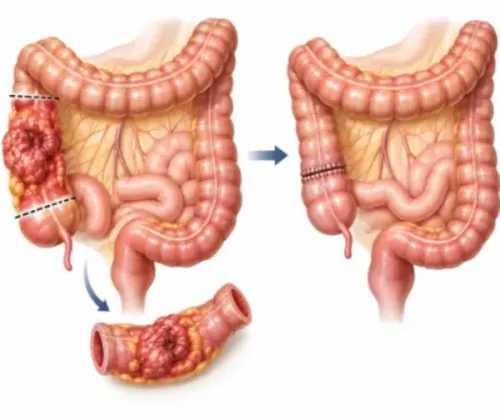
Definitive rectal prolapse treatment is commonly surgical when symptoms are significant. The main choices are abdominal rectopexy, including laparoscopic or robotic approaches, and perineal procedures.
- Surgeons weigh anatomy, constipation, incontinence, previous operations, age, frailty and anaesthetic risk.
- Rectopexy can worsen constipation; removing a redundant sigmoid segment may be considered when constipation is substantial.
- Laparoscopic or robotic surgery is not automatically safest when severe frailty, obstruction or strangulation changes the risk.
How should you choose care in Nagpur without delaying urgent treatment?
Choose a clinician by experience, not by the first search result for “rectal prolapse doctor in Nagpur” or “colorectal surgeon in Nagpur.” For a stable patient, Dr Hemant Chhajed Surgeon is a local option for discussing examination and surgical planning.
Ask these questions before booking elective rectal prolapse treatment:
- Does the clinician personally perform anorectal examinations and manage full-thickness prolapse?
- Will they assess sphincter function and continence?
- Do they offer both abdominal and perineal approaches when appropriate?
- How will constipation, faecal incontinence, previous surgery and anaesthetic risk change the plan?
- Is colon evaluation, such as colonoscopy, needed before elective surgery?
Laparoscopic abdominal surgery can mean smaller incisions and faster recovery than open surgery in suitable patients. Severe frailty, major anaesthetic risk, obstruction or strangulation can make another approach safer or make emergency treatment more important.
| Care route | Choose it when | What happens next |
|---|---|---|
| Emergency department in Nagpur | Prolapse is irreducible, discoloured or severely painful; heavy bleeding, vomiting, abdominal swelling, or inability to pass stool or gas occurs | Do not wait for a named specialist |
| Planned specialist appointment soon | Prolapse reduces but keeps returning, leaks mucus, bleeds or causes incontinence | Arrange examination and treatment planning |
| Elective surgical discussion | Symptoms are stable and the diagnosis is confirmed | Compare abdominal, laparoscopic, robotic and perineal options |
A reducible prolapse still needs timely specialist assessment; temporary reduction does not prove that the problem has resolved.
Frequently asked questions
What is coming through the anus, and how urgent is the diagnosis?
Rectal prolapse is rectal wall tissue protruding through the anus. Full-thickness prolapse forms a larger, often circular projection; mucosal prolapse involves only the inner lining. A visible prolapse that returns inside needs prompt planned assessment, while severe symptoms require emergency care.
Which warning signs mean you should go to emergency care now?
Go to emergency care for severe or worsening pain, heavy bleeding, tissue that remains outside and cannot be pushed back gently, dark purple or black tissue, fever, vomiting, abdominal swelling, or inability to pass stool or gas.
Why does a reducible prolapse still need a specialist assessment?
A prolapse that returns inside can recur and cause bleeding, mucus leakage, constipation, impaired bowel control, or tissue damage. A specialist must confirm whether it is rectal prolapse, mucosal prolapse, haemorrhoids, or another condition.
Which tests and treatments determine the next step?
Assessment usually begins with a history and examination, sometimes while you strain. A doctor may recommend a digital rectal examination, anoscopy, colonoscopy, defecography, or anorectal testing based on symptoms. Treatment ranges from constipation and pelvic-floor management to surgery, depending on prolapse type, severity, health, and bowel-function problems.
How should you choose care in Nagpur without delaying urgent treatment?
For emergency warning signs, use the nearest emergency department immediately. For a reducible prolapse without red flags, book prompt assessment with a rectal prolapse doctor in Nagpur, colorectal surgeon, or general surgeon experienced in laparoscopic abdominal procedures.
Keywords