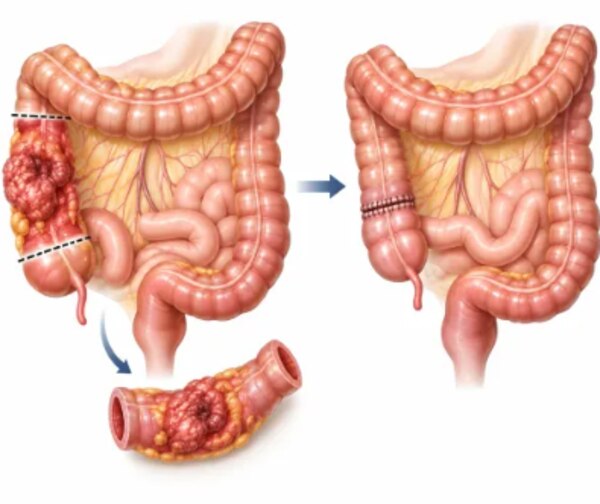
A left hemicolectomy can leave you managing two recovery questions at once: how your bowel is adapting and whether a bulge near the surgical site is ordinary healing or an incisional hernia. You will learn what the operation changes, which symptoms need urgent assessment, and how surgeons decide between combined repair, staged treatment, or observation.
Key takeaways
- Report a growing bulge, worsening pain, vomiting, or fever after colon surgery.
- Hernia repair timing depends on contamination risk, symptoms, health, and surgical findings.
- Bring operative notes, imaging, medication details, and abdominal symptom history to consultation.
- Strengthen recovery with prescribed activity limits, wound care, nutrition, and smoking cessation.
What a left hemicolectomy changes—and where a hernia can develop
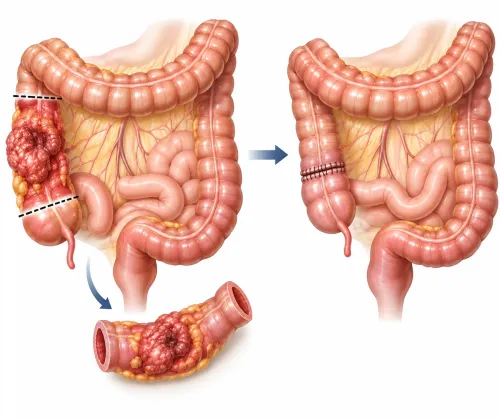
A left hemicolectomy usually removes the descending colon. Depending on the disease, blood supply and operative findings, the surgeon may also remove part of the transverse or sigmoid colon.
The remaining bowel is commonly reconnected with an anastomosis; a temporary or permanent colostomy or ileostomy may be safer when that join is at high risk of leaking.
| Operation | Abdominal access | Early trade-off |
|---|---|---|
| Open surgery | One larger incision, often extending across the abdomen | More early soreness and a longer hospital stay |
| Laparoscopic surgery | Several small port sites across the abdominal wall | Less early pain and a shorter hospital stay |
| Conversion to open surgery | Laparoscopic ports plus a larger incision | Needed if adhesions, bleeding, difficult anatomy or cancer-related technical problems make keyhole surgery unsafe |
Every incision creates a potential weak point. An incisional hernia can develop at the main wound, while a port-site hernia is less common; either can appear months or years later. Wound infection, obesity, smoking, diabetes and poor nutrition increase the risk.
Left hemicolectomy recovery includes soreness, fatigue and reduced appetite. Bowel frequency, urgency, stool consistency and gas can change for weeks, so a healed skin wound does not prove complete recovery. Colon surgery care includes watching for a growing bulge, especially when standing, coughing or straining.
Increasing pain, vomiting, abdominal swelling, fever, wound drainage, inability to pass stool or gas, or a bulge that cannot be pushed back needs prompt medical review.
How to tell normal recovery from a hernia or postoperative problem
During left hemicolectomy recovery, soreness, fatigue, reduced appetite, gas and changing bowel frequency or urgency can be normal. A new lump is not automatically a hernia: ordinary swelling usually settles, while a seroma is a fluid collection that feels soft or fluctuant.
Muscle weakness may cause discomfort without a distinct sac; an incisional hernia is a gap in the abdominal wall at a previous incision.
| Pattern | Findings | What it suggests |
|---|---|---|
| Ordinary swelling | Diffuse fullness near the wound that gradually improves | Expected healing |
| Seroma | Soft or fluctuant, localised collection beneath the skin | Fluid collection |
| Muscle weakness | Aching or pulling without a clear defect or enlarging bulge | Temporary abdominal-wall weakness |
| Incisional hernia | Bulge that becomes clearer when standing, coughing or straining; it may reduce when lying down or with gentle pressure | Abdominal-wall defect |
A clinician checks for a palpable defect, tenderness and whether the skin is warm, red or discoloured. A healed skin incision does not prove that deeper tissues or bowel function have recovered, so colon surgery care continues after the wound closes.
Seek prompt medical review for:
- Worsening or severe pain
- Repeated vomiting or increasing abdominal distension
- Inability to pass stool or gas
- Fever or wound drainage
- A painful bulge that cannot be pushed back
- Purple, blue or black skin over the bulge
These signs can indicate obstruction, strangulation, infection, an anastomotic problem or ileus. Do not wait for routine observation.
When should hernia repair happen: during the colectomy, later, or not yet?
Repair during a left hemicolectomy is not automatic. The choice in left hemicolectomy and incisional hernia care depends on contamination, hernia symptoms, anastomotic risk and your health.
| Option | Main advantage | Main concern or suitable situation |
|---|---|---|
| Combined repair | Avoids a second anaesthetic and operation | Consider only for a carefully selected patient with a clean, elective colectomy and a symptomatic hernia; mesh faces contamination, infection, recurrence and bowel-leak consequences |
| Staged repair | Separates colorectal healing from abdominal-wall reconstruction | Safer when surgery is urgent or contaminated, the anastomosis has high leak risk, or a previous mesh is present |
| Watchful waiting | Avoids immediate repair and its recovery | Reasonable for a small, reducible, minimally symptomatic hernia after discussing enlargement and activity limitations |
Colorectal surgery is clean-contaminated, even when planned. A longer combined operation also increases physiological stress, and an infected mesh or bowel leak can turn one problem into prolonged treatment.
Staging deserves serious consideration if you have active infection, poor nutrition, anaemia, uncontrolled diabetes, obesity, smoking, steroid use or a high-risk anastomosis. Optimisation is part of repair planning, not an unnecessary delay:
- Stop smoking before elective surgery.
- Improve protein and calorie intake and correct malnutrition.
- Control diabetes and treat active infection.
- Manage weight and correct anaemia.
The safest timing may change as these risks improve. Discuss whether pain, enlargement or restricted work and exercise justifies repair now, or whether observation remains the better choice.
What happens at an incisional hernia consultation in Nagpur
The surgeon decides whether to observe, repair or investigate the bulge by combining its examination findings, symptoms, operative history and imaging needs.
Bring these records to an incisional hernia consultation in Nagpur:
- Left hemicolectomy operative note
- Discharge summary
- Pathology report
- Current medication list
- Details of any stoma and previous mesh
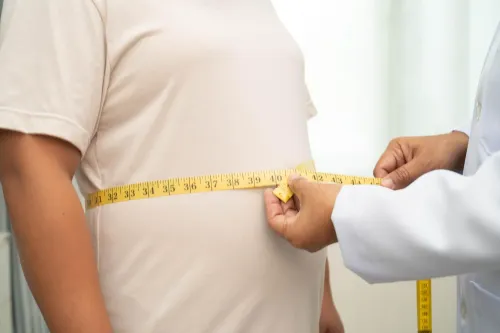
The examination records the scar’s location and length, defect size, reducibility, tenderness, skin condition, abdominal-wall function and body mass index. Explain what happens when you cough, lift, stand, bend or complete daily activities.
| Finding | Likely plan | What changes the decision |
|---|---|---|
| Observation | Small, reducible, minimally symptomatic defect | Enlargement, pain or activity limits |
| Repair | Persistent symptoms or a defect affecting function | Fitness, nutrition, diabetes, smoking and prior mesh |
| Further investigation | Unclear diagnosis or complex anatomy | Recurrent, large or bowel-containing hernia |
Ultrasound can answer a focused question for a small, superficial, clearly reducible lump, such as whether it contains fluid or moves through the abdominal wall. CT of the abdominal wall and colon-surgery area gives more planning detail for a large or recurrent hernia, difficult examination, abdominal-wall muscle loss, suspected bowel involvement or complex reconstruction.
Ask whether the surgeon regularly performs abdominal-wall reconstruction, which open, laparoscopic or robotic approach is proposed, where mesh would sit, how the colon operation affects infection risk, and what happens if bowel lies in the sac. Dr Hemant Chhajed Surgeon is one local option for discussing these case-specific choices.
How to prepare for safer colon surgery and hernia decisions
Safer preparation starts with a coordinated plan for the colon operation and the abdominal wall, not a choice between open and minimally invasive surgery. Follow the prescribed bowel preparation exactly; it is not a substitute for appropriately timed intravenous antibiotic prophylaxis or venous-thromboembolism prevention.
Do not add laxatives, stop anticoagulants, or change insulin or other diabetes medicines without the surgical and anaesthesia teams.
Enhanced-recovery colon pathways may include:
- A specified carbohydrate drink or clear-fluid policy before surgery, opioid-sparing pain relief, early walking, early urinary-catheter removal, and eating or drinking once clinically tolerated.
- A temporary ileostomy or colostomy if the colorectal join has a high leak risk. This does not prove the join failed or mean the stoma is permanent; reversal requires healing, suitable health and a separate assessment.
- Discharge instructions covering when to call, wound support, lifting limits and monitoring of bowel frequency, urgency, stool consistency and gas.
For left hemicolectomy and incisional hernia care, discuss whether to stage the procedures:
| Option | Main advantage | Main concern |
|---|---|---|
| Combined operation | One anaesthetic and recovery period | Clean-contaminated colon surgery increases mesh-infection, leak and recurrence concerns |
| Staged repair | Separates bowel healing from hernia repair | Requires another operation and anaesthetic |
| Hernia observation | Avoids repair while a small, reducible hernia causes little trouble | The bulge may enlarge or become painful |
That decision matters more than whether each operation uses open or laparoscopic access.
Frequently asked questions
What changes after a left hemicolectomy?
The operation usually removes the descending colon and can include part of the transverse or sigmoid colon, depending on disease, blood supply, and operative findings.
How can you distinguish normal left hemicolectomy recovery from an incisional hernia?
A new or enlarging bulge near the incision, pain with coughing or standing, wound separation, vomiting, fever, or increasing abdominal pain needs medical assessment.
Should hernia repair happen during the colectomy or later?
The decision depends on contamination risk, hernia symptoms and size, tissue quality, overall health, and whether combining procedures is safe. A later repair may be safer when infection risk is high.
What happens at an incisional hernia consultation in Nagpur?
The surgeon reviews your operative records and symptoms, examines the scar and abdominal wall, and decides whether observation, imaging, or repair is appropriate.
Keywords