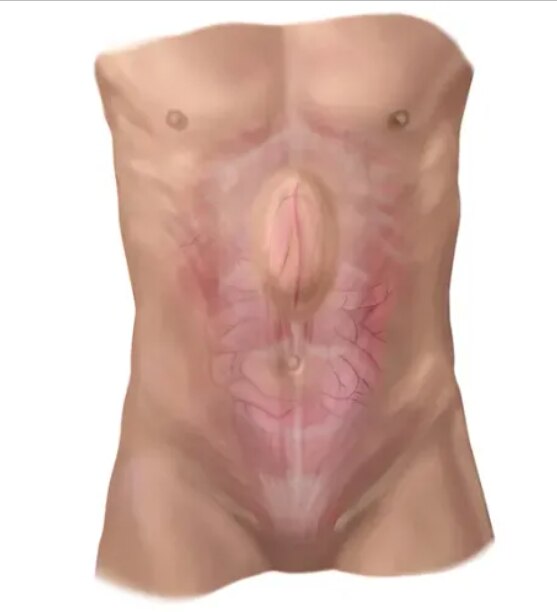
The first appointment depends on urgency, not on which operation sounds more serious. Use your symptoms, urinary function, cancer risk, previous abdominal operations and overall health to decide whether a general surgeon, a urologist, or both specialists should assess you first.
Key takeaways
- Seek emergency care for a trapped hernia, vomiting, swelling, fever, or inability to pass stool.
- Book the hernia consultation first when the bulge is painful, tense, enlarging, or irreducible.
- Book the prostate consultation first when urinary retention, recurrent infections, or kidney problems are present.
- Arrange parallel consultations when both conditions are stable but surgery timing could affect the other procedure.
Emergency symptoms decide the order before routine booking
A painful incisional hernia that cannot be pushed back needs urgent surgical assessment, not a routine prostate appointment. Sudden abdominal pain, a rapidly enlarging or tense bulge, vomiting, abdominal swelling, fever, or inability to pass stool or gas can signal bowel obstruction or strangulation.
Previous abdominal surgery increases the importance of prompt triage because the weakness lies along an old incision.
Seek emergency care immediately for any of these warning signs:
- An irreducible hernia with worsening pain, vomiting, swelling, or no stool or gas.
- Inability to urinate, repeated urinary retention, or rapidly worsening urinary pain.
- Fever with urinary symptoms, kidney impairment linked to obstruction, recurrent urinary infection, or bladder stones.
- Persistent visible blood in the urine.
Do not wait for an elective incisional hernia consultation in Nagpur or prostate surgery consultation in Nagpur when these symptoms occur. Emergency clinicians must first assess possible bowel compromise, urinary obstruction, infection, bleeding, or kidney injury.
A soft bulge that returns when you lie down or with gentle pressure, without severe pain, vomiting, fever, or bowel changes, follows a different pathway. Book routine specialist reviews and describe when it appears, whether it reduces, and whether it is growing.
The hernia may be observed while urinary symptoms are investigated, but new pain, rapid enlargement, or difficulty reducing it changes the order.
When the hernia consultation should come first
Book the general surgeon first when the incisional hernia is painful, enlarging, difficult to push back, or limiting walking and daily activity. Choose this route after a previous mesh infection or wound problem, or when the hernia could change the planned prostate operation.
| Route | Book first when | Why it matters |
|---|---|---|
| General surgeon | Pain, enlargement, difficult reduction, activity limits, prior mesh or wound problems | The abdominal wall may need assessment before prostate treatment |
| General surgeon | The planned prostate operation could affect trocar sites, incisions, mesh position, catheter use, or infection risk | The operative plans must be coordinated |
| Observation with urology review | The hernia is easily reducible and minimally symptomatic | A large hernia alone does not automatically require the first consultation |
During an incisional hernia consultation in Nagpur, the surgeon will review:
- The old incision, original operation, previous repairs, and any mesh infection or wound separation
- The defect’s location and size, whether it reduces, and the condition of the surrounding abdominal wall
- Body mass index, smoking, diabetes control, current medicines, and factors that affect healing
CT mapping helps when examination findings are uncertain, the hernia is large or recurrent, or complex repair planning requires a view of the entire abdominal wall. Bring earlier scans and the previous operation note if available.
For people considering hernia surgery in Nagpur, this review clarifies whether repair should precede prostate treatment, follow it, or wait while uncomplicated urinary symptoms are investigated.
When the prostate consultation should come first
Book the urology or prostate consultation first when urinary retention is acute or recurrent, obstruction has impaired kidney function, urinary infections keep returning, bladder stones are present, or visible blood in the urine persists. These findings need prompt assessment, not routine scheduling based only on prostate size.
For uncomplicated lower-urinary-tract symptoms from suspected benign prostatic enlargement, surgery is usually considered after medication fails or when significant obstruction or complications develop. The consultation must establish whether the cause is benign enlargement, prostatitis, obstruction, or possible cancer. The evaluation may include:
- Symptom scoring and a complete medication review
- Abdominal and genital examination
- Digital rectal examination
- Urinalysis and kidney-function blood tests
- PSA testing when clinically appropriate
- Ultrasound or other prostate imaging
- A decision about whether biopsy is needed
A large prostate alone does not make prostate surgery the first step. A prostate surgery consultation in Nagpur, including with a prostate surgeon in Nagpur, is not a substitute for cancer assessment; urinary symptoms do not prove that the condition is benign.
Ask which finding is driving the proposed treatment, whether obstruction is documented, and whether PSA, examination, imaging, or biopsy changes the plan. A catheter, repeated retention, infection, kidney impairment, stones, or persistent haematuria strengthens the case for prompt specialist review.
When both consultations should happen in parallel
Arrange both appointments in parallel when both conditions are active but neither is an emergency, when prostate treatment could change hernia timing, or when either operation could affect the other. This applies to an incisional hernia or prostate surgery consultation in Nagpur, just as it does elsewhere.
The teams must coordinate:
- Anaesthesia fitness, including heart and lung risk, kidney function, anaemia, diabetes, smoking, infection, anticoagulants, antiplatelet drugs, and previous anaesthetic problems.
- Operative positioning, trocar or incision placement, mesh position, and whether one procedure could compromise the other.
- Urinary-catheter use, contamination or infection risk, wound care, and recovery restrictions such as lifting limits or catheter management.
- Current scans, laboratory results, medication changes, and the order in which each condition needs treatment.
Combining operations is not an automatic solution. One anaesthetic and admission can be useful, but longer operating time, greater technical complexity, urinary-management problems, and wound complications can outweigh that benefit. A hernia surgery in Nagpur and prostate surgery consultation in Nagpur should therefore be planned together, not combined by default.
After both specialists review the case, the safest plan may be hernia first, prostate first, staged treatment, observation, or combined surgery. Do not stop anticoagulants, antiplatelet drugs, or diabetes medicines without the prescribing clinician’s instructions.
How to coordinate specialists and prepare for appointments in Nagpur
Take one folder to both appointments and give each team the same medication and investigation list. Use this handover checklist:
1. For an incisional hernia consultation in Nagpur, bring the previous operation note, discharge summary, earlier CT or ultrasound scans, and a list of every abdominal operation and mesh repair. Add details of any wound infection, including treatment and drainage, plus a description or photograph showing when the bulge appears.
2. For a prostate surgery consultation in Nagpur, bring PSA results, urine and blood tests, medication history, catheter or urinary-retention records, prostate imaging, and biopsy reports. Include all anticoagulants, antiplatelet drugs, diabetes medicines, allergies, and previous anaesthetic problems.
3. Ask both teams whether the same imaging and laboratory results remain current, so you do not repeat tests without a reason. Write down the proposed order: hernia first, prostate treatment first, staged procedures, observation, or combined surgery.
For an incisional hernia or prostate surgery consultation in Nagpur, the relevant specialist matters more than the city label. Dr Hemant Chhajed Surgeon can assess the abdominal wall and hernia as a general and laparoscopic surgeon; urinary obstruction, prostate cancer assessment, and prostate operations require a urologist or prostate surgeon.
Related services
Expertise ₹500 Approximately one third of patients will develop an incisional hernia after abdominal surgery. View service → |
Expertise ₹500 Hernias are a common medical condition that occurs when an organ or fatty tissue pushes through a weak spot in the surrounding muscles or connective... View service → |
Frequently asked questions
Which consultation comes first for an incisional hernia and prostate problem?
Emergency hernia symptoms take priority. If both conditions are stable, choose the consultation linked to the more urgent symptoms, test results, or planned operation.
When should I seek emergency care for an incisional hernia?
Seek urgent surgical assessment for a painful hernia that cannot be pushed back, a rapidly enlarging or tense bulge, vomiting, abdominal swelling, fever, or inability to pass stool or gas.
When should the hernia consultation come first?
Book the hernia consultation first when the bulge is painful, enlarging, tense, irreducible, or causing vomiting, bowel changes, or repeated obstruction symptoms.
When should the prostate consultation come first?
Book the prostate consultation first when urinary retention, recurrent urinary infections, blood in the urine, worsening kidney function, or severe urinary symptoms require prompt evaluation.
Can hernia and prostate consultations happen in parallel?
Yes. Parallel consultations help when both conditions are stable and the doctors need to coordinate imaging, anaesthesia, medication changes, catheter planning, or the order of operations.
Keywords