A belly-button lump with burning urination, blood in the urine or difficulty passing urine can involve two separate problems, not one condition causing every symptom. Use the symptom pattern and the emergency warning signs to decide whether you need an emergency department, a general surgeon, a urologist, or both evaluations.
Key takeaways
- Seek emergency care for a painful, firm, discoloured, or irreducible lump.
- Choose urology for urinary symptoms; choose hernia care for a changing navel lump.
- Arrange both evaluations when urinary and abdominal symptoms overlap.
- The first visit may include examination, urine testing, ultrasound, or blood tests.
Emergency symptoms change the order completely
Go to an emergency department if a belly-button lump becomes suddenly severe, firm, discoloured or impossible to push back. Vomiting, increasing abdominal swelling, or inability to pass stool or gas raises concern that bowel is trapped or losing its blood supply.
Do not wait for routine hernia or urinary symptoms to be reviewed when these signs appear.
Seek immediate assessment for inability to urinate, severe flank or abdominal pain, fever with vomiting, confusion, or fever with painful urinary blockage. Visible blood in the urine needs medical assessment even without pain; clots, heavy bleeding or difficulty passing urine make it an emergency.
Recurrent blood should not be blamed automatically on infection or a hernia.
- Non-reducible, painful lump: emergency assessment.
- Inability to urinate: emergency assessment.
- Severe pain with vomiting or abdominal swelling: emergency assessment.
- Fever with obstruction, flank pain or repeated vomiting: emergency assessment.
- Blood in urine without the signs above: prompt urology or medical evaluation.
| Situation | Why the order changes | Action |
|---|---|---|
| Trapped hernia signs | Bowel obstruction or strangulation is possible | Emergency department first |
| Urinary retention | The bladder cannot empty and needs prompt treatment | Emergency department first |
| Visible blood in urine | Infection, stone or another urinary cause needs investigation | Same-day medical assessment; emergency care for clots or blockage |
| Stable lump and mild urinary symptoms | Neither problem shows an immediate danger sign | Arrange the more relevant specialist, or book both in parallel |
Match each symptom to the specialist most likely to help
Burning urination, urgency, frequency, weak stream, or blood in the urine points first to a urinary condition, not an umbilical hernia. A visible navel lump that grows with standing, coughing, or straining points first to a general surgeon.
When you have hernia or urinary symptoms, match the dominant pattern:
- Urinary condition: Burning, urgency, frequent urination, weak stream, difficulty starting, blood in the urine, or inability to urinate calls for a urologist. Flank pain with nausea may indicate a kidney stone; fever with urinary symptoms may indicate infection. Inability to urinate needs emergency assessment.
- Umbilical hernia: A lump at the belly button, with local pulling or aching that worsens during lifting or coughing, fits an abdominal-wall hernia. Start with a general surgeon.
- Groin hernia: A bulge in the groin or scrotum that appears when standing or straining points toward a groin hernia, also assessed by a general surgeon.
- Another abdominal problem: Constant or spreading abdominal pain without a clear lump, persistent vomiting, marked bloating, or pain away from the navel needs broader medical assessment rather than assuming either specialty is correct.
If both symptoms are mild and stable, book the specialist linked to the symptom most likely to change treatment first, or arrange both consultations in parallel. If you are searching for urology in Nagpur, take urinary symptoms seriously; hernia repair will not resolve an unrelated bladder or prostate problem.
Use the lump’s behaviour to judge whether it is a hernia
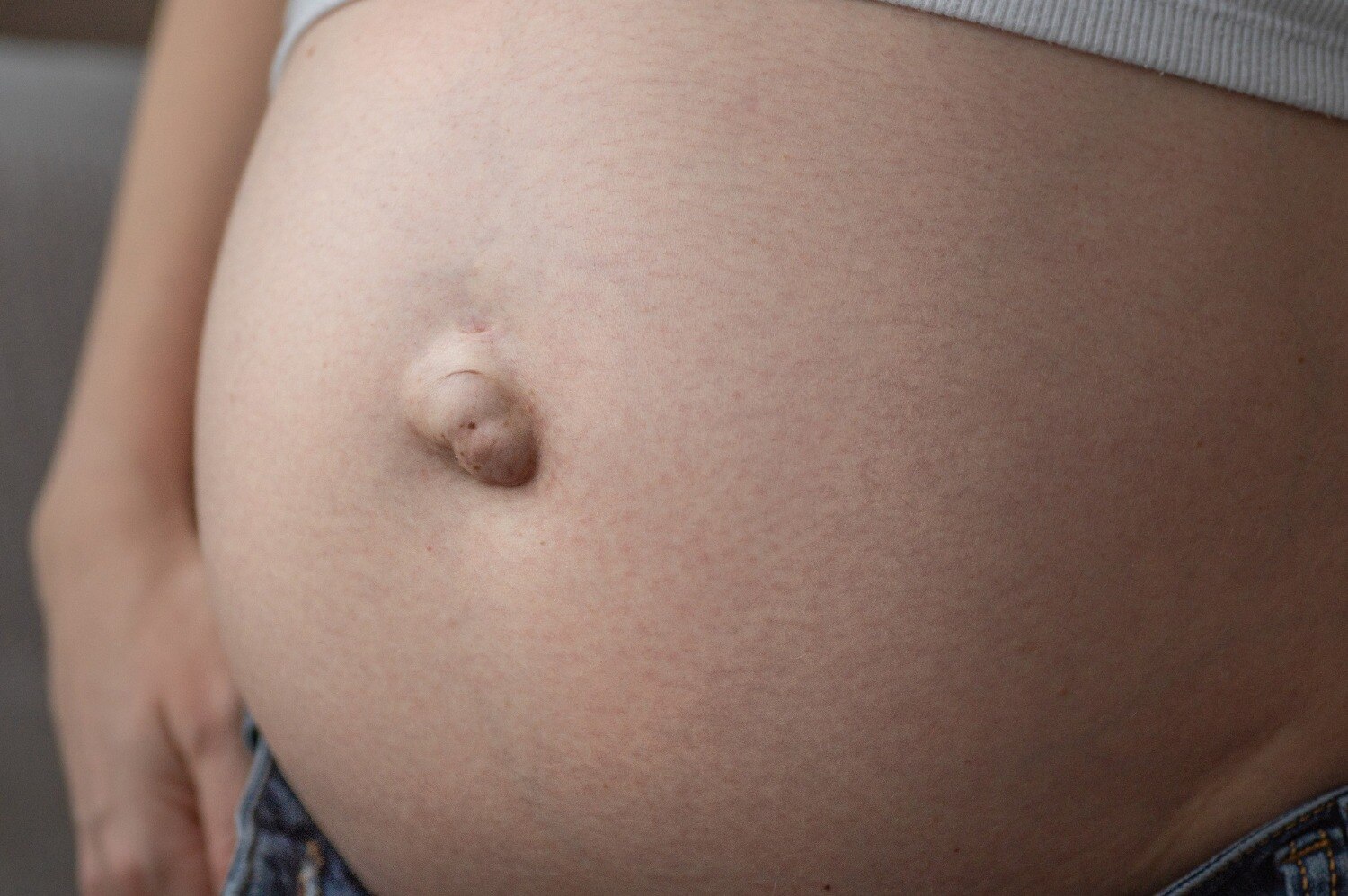
A lump that becomes more obvious when you stand, cough, or strain and flattens when you lie down behaves like a reducible umbilical hernia. Pressure pushes abdominal tissue through a weak spot at the navel; lying down reduces that pressure, so the bulge may disappear.
You can observe this pattern, but do not force the lump back or repeatedly press it. A general-surgeon assessment fits this pattern, especially if the lump returns with activity, enlarges over time, or causes aching after lifting.
The behaviour supports a hernia, but examination is needed to identify its contents and decide whether repair is appropriate.
A lump that stays out while you lie down, feels hard or fixed, or remains tender deserves prompt medical assessment. Increasing pain, skin redness, vomiting, or difficulty passing stool or gas makes it urgent because the protruding tissue may be trapped. Do not wait for an umbilical hernia or urology evaluation to settle the question.
Urinary symptoms do not make the navel lump a urinary problem. Burning, urgency, frequency, weak stream, blood in the urine, flank pain, or difficulty passing urine call for urology evaluation; these symptoms can arise from infection, stones, prostate enlargement, or bladder disease.
Arrange both assessments when a changing or tender lump occurs alongside persistent urinary symptoms.
Choose one evaluation first—or arrange both in parallel
Book a general surgeon first when the main finding is a soft, reducible belly-button lump that appears with standing, coughing or straining. An uncomplicated umbilical hernia is assessed by examining the abdominal wall; ultrasound or CT is reserved for uncertainty, obesity or a difficult examination.
Searchers arranging an umbilical hernia consultation in nagpur should choose a facility able to manage abdominal emergencies.
Book a urologist first when urinary symptoms dominate, including burning, frequency, weak stream, difficulty starting, flank pain or unexplained blood in the urine. Visible blood deserves assessment even without pain; do not assume it comes from a hernia or a urinary infection.
| Situation | First contact | Why |
|---|---|---|
| Hernia lump, urinary symptoms mild | General surgeon | The abdominal-wall problem is more likely to determine near-term treatment |
| Urinary symptoms without a convincing hernia | Urologist | Infection, stone, prostate enlargement or bladder disease needs urinary evaluation |
| Both problems are persistent or surgery is being considered | Both in parallel | Coordinated assessment prevents one issue delaying the other |
| Urinary retention, severe pain, vomiting, fever with obstruction, or a firm discoloured lump that will not reduce | Emergency department | Retention, obstruction or a trapped hernia needs immediate assessment |
There is no universal rule in every mixed case. If both problems are mild and stable, arrange the specialist most likely to change your next decision, or book both appointments together. An umbilical hernia or urology evaluation should never delay emergency care.
Know what the first appointments will actually check
A general surgeon examines the belly-button area while you stand, cough and strain, then checks whether the lump reduces when you lie down. They ask about pain, growth, previous abdominal operations, bowel symptoms and activity limits.
Ultrasound or CT is usually reserved for an uncertain examination, obesity, a difficult-to-feel abdominal wall or concern about another problem.
| Appointment | What it checks | What to bring or expect |
|---|---|---|
| General-surgeon hernia consultation in Nagpur | Defect size, tenderness, reducibility and signs needing urgent repair | Symptom timeline, operation history and a discussion of observation versus repair |
| Urology in Nagpur | Burning, frequency, weak stream, blood in urine, flank pain and retention | Urine testing, kidney-function assessment or imaging when the symptoms require it |
| Emergency department | Severe pain, vomiting, fever with obstruction, urinary retention or a hard, discoloured lump that will not reduce | Immediate assessment, not a routine clinic slot |
Choose the specialist who matches the symptom driving the decision: a reducible belly-button lump points to a general surgeon, while unexplained blood in urine, repeated burning, weak stream or flank pain points to a urologist.
If both are mild and stable, book both in parallel; Dr Hemant Chhajed Surgeon can assess the abdominal-wall concern, while a urologist evaluates the urinary symptoms.
In Nagpur, check that the chosen facility can transfer you promptly to emergency care. Go straight to an emergency department if pain escalates, vomiting begins, urine stops, or the lump becomes fixed.
Related services
Expertise ₹500 An umbilical hernia is a tissue bulge on or near your belly button. Umbilical hernias in children usually disappear by age 4 or 5. View service → |
Expertise ₹500 Hernias are a common medical condition that occurs when an organ or fatty tissue pushes through a weak spot in the surrounding muscles or connective... View service → |
Frequently asked questions
When does an umbilical hernia need emergency care?
Go to an emergency department when the lump becomes suddenly painful, firm, discoloured, or impossible to push back. Vomiting, increasing abdominal swelling, or inability to pass stool or gas are additional warning signs.
Which specialist should I see for hernia or urinary symptoms?
Choose a surgeon for a navel lump that changes with standing, coughing, or straining. Choose a urologist for burning urination, blood in urine, flank pain, urinary retention, or changes in urine flow.
How can I tell whether a belly-button lump is an umbilical hernia?
A hernia often becomes more noticeable when you stand, cough, or strain and may reduce when you lie down. A clinician must examine the lump to confirm the diagnosis.
Should I arrange a hernia or urology evaluation first?
Use the dominant symptom to choose the first appointment. Arrange both in parallel when a navel lump occurs with persistent urinary symptoms, or seek emergency care when red flags appear.
Keywords