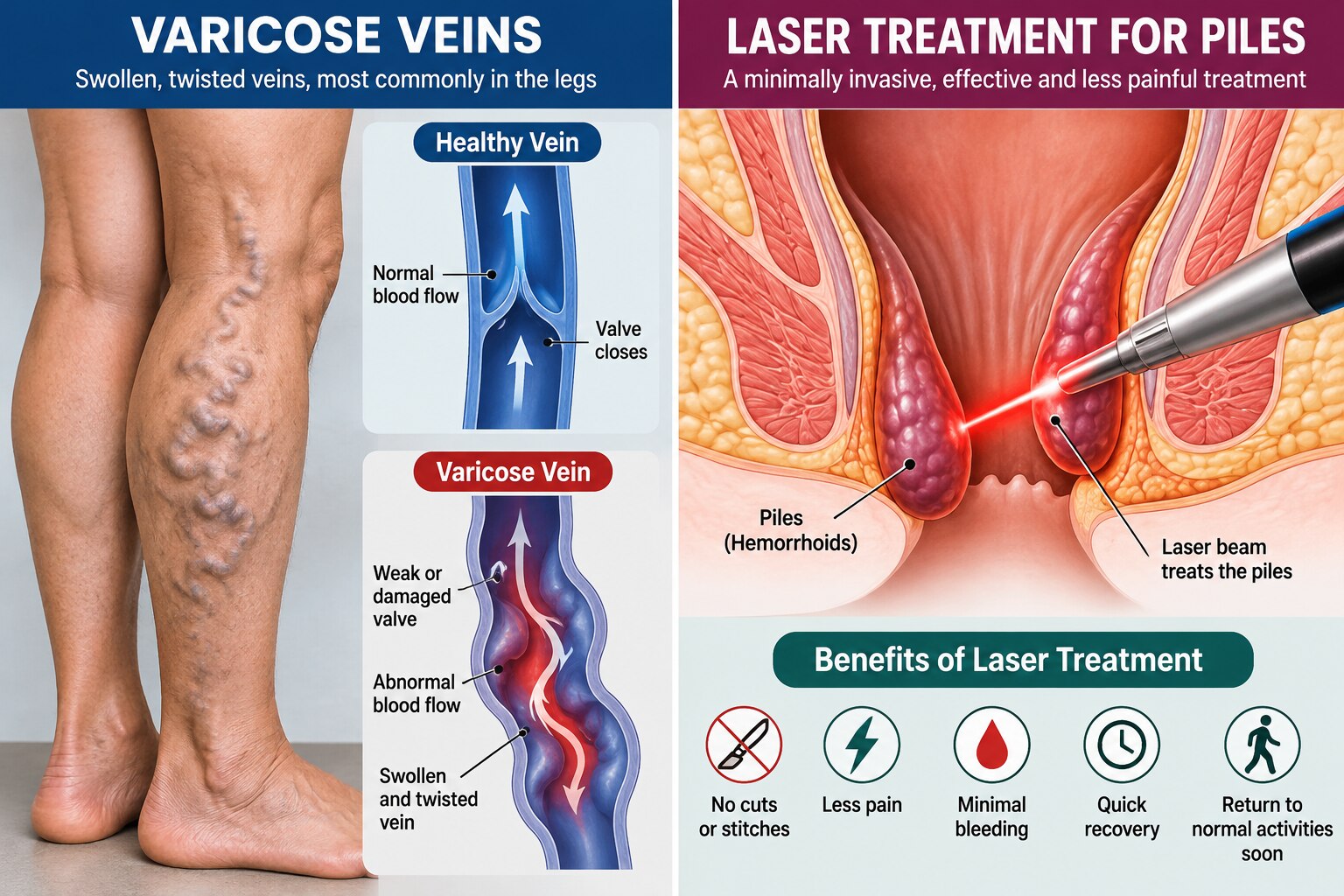
Varicose veins in the legs and haemorrhoids in the anal canal both involve blood vessels, but they are separate conditions with different causes, examinations and treatments. You will be able to tell whether your symptoms point to piles, understand which laser procedure is being proposed, and identify when another treatment or further investigation is safer.
Key takeaways
- Leg varicose veins and haemorrhoids are separate conditions requiring different assessments.
- A piles laser treats haemorrhoids; it does not treat faulty leg-vein valves.
- Rectal bleeding needs examination before you choose a piles laser procedure.
- Haemorrhoid grade determines whether laser treatment is suitable.
Why leg varicose veins and piles are different conditions
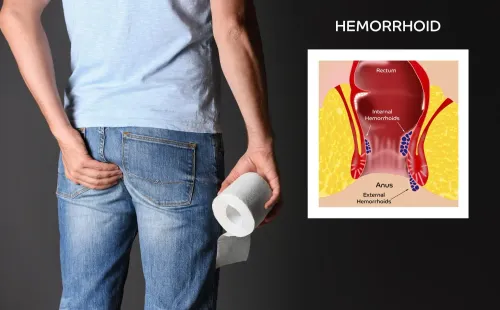
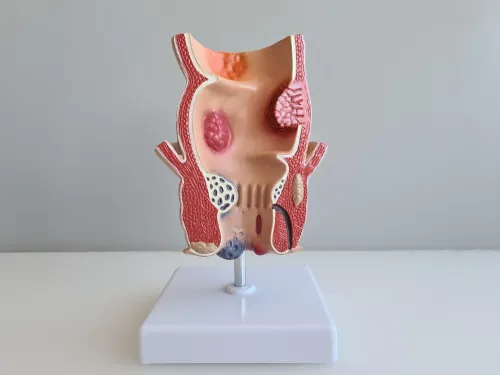
Varicose veins and haemorrhoids occur in different parts of the body and are diagnosed as separate conditions. Varicose veins are enlarged superficial leg veins caused mainly by faulty valves and blood pooling. Haemorrhoids are swollen vascular cushions in the anal canal; these cushions are normal structures that become enlarged or symptomatic.
Having varicose veins does not, by itself, mean that you have piles or that you face a higher risk of developing them. Piles do not cause leg varicose veins either. The conditions can appear in the same person because they share some influences, but that association does not prove that one caused the other.
Shared influences include:
- Pregnancy, which increases pressure in pelvic and leg veins
- Obesity, which adds pressure to the venous system
- Prolonged standing, which encourages blood pooling in the legs
- Family tendency toward vein problems
- Constipation and repeated straining, which are particularly relevant to haemorrhoid symptoms
The treatment targets also differ. Endovenous laser treatment places a fibre inside a problem leg vein to close it, while laser treatment for piles acts on internal haemorrhoidal tissue through the anal route.
The equipment settings, access route and clinical purpose are different, so leg-vein laser treatment will not treat piles, and varicose veins alone are not a reason to choose laser treatment for piles.
Why a piles laser is not the same as leg-vein laser treatment
A laser is an energy source, not a single operation. No: the laser used in a piles laser procedure does not work like endovenous laser treatment for leg varicose veins. The target, access route and clinical purpose are different.
| Feature | Piles laser | Endovenous laser treatment |
|---|---|---|
| Target | Enlarged haemorrhoidal vascular cushions inside the anal canal | An incompetent superficial leg vein with faulty valves |
| Access | Through the anus, using an anal instrument | Through a needle or small catheter inserted into the leg vein |
| Purpose | Shrink or coagulate haemorrhoidal tissue and reduce prolapse or bleeding | Seal the diseased vein so blood reroutes through healthier veins |
| Assessment | Examination of the anus and rectum, with treatment chosen by haemorrhoid type and grade | Duplex ultrasound maps reflux before treatment |
The word “laser” does not identify one piles operation. It can mean laser haemorrhoidoplasty, laser coagulation or a laser-assisted haemorrhoidectomy; tissue removal, anaesthesia, recovery and recurrence risk differ.
- Ask for the exact procedure name, not only “laser piles treatment.”
- Confirm whether it treats internal, external or mixed haemorrhoids, because a method designed for internal disease may not address an external lump.
- Ask what anaesthesia, follow-up and recurrence plan are included.
Choosing varicose veins treatment in Nagpur does not treat haemorrhoids, and having leg varicose veins does not create an indication for piles laser.
Which bleeding and bowel symptoms need an examination first
Bright-red bleeding on toilet paper can occur with haemorrhoids, but colour alone cannot prove the source. A clinician asks about bleeding, pain, itching, prolapse, constipation and bowel-habit changes, then examines the anus and rectum. The assessment records whether disease is internal, external or mixed, and grades internal prolapse from I to IV.
| Finding or symptom | What it may suggest | What the clinician may do |
|---|---|---|
| Bright-red blood with a visible prolapsing lump | Internal haemorrhoids | Inspect the anus and use an anoscope to view the anal canal |
| Sharp pain during or after passing stool | Anal fissure, thrombosed external haemorrhoid or another lesion | Inspect carefully; perform a digital rectal examination if tolerable |
| Blood mixed through stool, persistent bleeding or a new bowel-habit change | Bleeding higher in the bowel | Arrange colon evaluation, often colonoscopy, when the history or examination warrants it |
| Black, tarry stool, heavy bleeding, faintness or rapid worsening | Significant gastrointestinal bleeding | Seek urgent medical assessment |
A digital rectal examination checks for tenderness, a mass and blood; anoscopy identifies internal haemorrhoids and their location. Colon evaluation deserves particular attention with weight loss, anaemia, a family history of bowel cancer, or age at or above the recommended colorectal-cancer screening age. Treat bleeding as unexplained until examination supports piles.
When laser treatment fits the haemorrhoid grade and when it does not
Laser suits selected internal haemorrhoids, especially prolapsing grade II and some grade III cases, after examination confirms that the symptoms come from piles. It is not a default treatment for every grade or every lump near the anus.
| Option | What it treats | When it applies |
|---|---|---|
| Observation and lifestyle treatment | Mild, uncomplicated symptoms | Grade I or small grade II haemorrhoids that improve with fibre, fluids, constipation treatment and less straining |
| Coagulation | Small internal haemorrhoids causing bleeding | Usually grade I and selected grade II disease |
| Rubber-band ligation | Internal haemorrhoids that bleed or prolapse | Commonly grade II and some grade III disease when tissue can be banded safely |
| Laser treatment | Selected internal prolapsing haemorrhoids | Grade II and some grade III cases after failure of conservative or office treatment |
| Conventional surgery | Bulky, advanced or mixed disease | Grade IV, extensive mixed internal-and-external haemorrhoids, large external haemorrhoids or recurrent prolapse |
Ask which exact operation is proposed. “Piles laser procedure” might mean laser haemorrhoidoplasty, laser coagulation or a laser-assisted haemorrhoidectomy; these remove different amounts of tissue and carry different recurrence risks.
Do not choose laser automatically for an acutely thrombosed external haemorrhoid, extensive external disease or advanced prolapse. A surgeon may recommend another operation, office treatment or observation instead, depending on examination findings, bleeding, pain and constipation.
What to check before choosing treatment in Nagpur
A laser label is not enough to choose treatment. Confirm the diagnosis through an appropriate examination, and ask whether the proposed procedure treats internal, external or mixed haemorrhoids. For leg symptoms, ask whether duplex ultrasound has mapped the faulty veins before considering varicose veins treatment in Nagpur.
At a consultation, including with Dr Hemant Chhajed Surgeon, ask for the exact procedure name, the anaesthesia plan, recovery restrictions, follow-up schedule and the plan if symptoms return. Tell the surgeon about warfarin, apixaban, rivaroxaban or aspirin, previous deep-vein thrombosis, pulmonary embolism, heart or lung disease, and any infection.
Never stop a prescribed blood thinner without instructions from the clinician managing it.
- Confirm who will perform the procedure and whether they are qualified for the relevant operation.
- Ask what pain relief, monitoring and same-day transport arrangements you need.
- Ask whether review includes wound checks, bowel advice or a leg-vein ultrasound review.
- Ask what happens if bleeding, swelling, persistent pain or recurrence develops.
- Ask why laser piles treatment in Nagpur is preferable to observation or another established option.
| Condition | Confirm before treatment | Alternatives to discuss |
|---|---|---|
| Piles | Examination and exact haemorrhoid type | Fibre and bowel management, rubber-band ligation, coagulation or conventional surgery |
| Leg veins | Duplex ultrasound and vein anatomy | Compression for symptom control, endothermal ablation, sclerotherapy or phlebectomy |
| Both absent | Reconsider the diagnosis | Treat the confirmed cause, not the word “laser” |
Related services
LASER TREATMENT FOR HEMORROIDS Laser treatment for piles (hemorrhoids) ₹500 1) Consultation . 2) LASER TREATMENT FOR HEMORROIDS. 3) SCLEROTHERAPY FOR HEMORROIDS View service → |
Expertise ₹500 Laser treatment is an out-patient and less-invasive(कम आक्रामक) laparoscopic procedure. View service → |
Frequently asked questions
Are leg varicose veins related to piles?
They are separate conditions. Varicose veins affect superficial leg veins, while haemorrhoids are enlarged vascular cushions in the anal canal.
Is a piles laser the same as laser treatment for varicose veins?
No. A piles laser targets haemorrhoid tissue inside or around the anal canal. Leg-vein laser treatment targets abnormal veins and their blood flow.
Which bleeding and bowel symptoms need examination first?
Arrange an examination for rectal bleeding, black stools, persistent pain, a change in bowel habits, weight loss, anaemia symptoms, or a lump that does not settle.
When is laser treatment suitable for haemorrhoids?
Suitability depends on the haemorrhoid grade, prolapse, bleeding, pain, and examination findings. Advanced prolapse may need another procedure.
What should you check before choosing piles laser treatment in Nagpur?
Confirm the diagnosis, haemorrhoid grade, proposed procedure, anaesthesia, recovery plan, complications, follow-up, and the surgeon’s experience with the treatment.
Related service
Expertise ₹500 Piles, are a common condition that affects millions of people worldwide. View service → |
Keywords