Bright-red bleeding, anal pain, a lump, or pus from an opening near the anus can have several causes, and the correct treatment depends on the diagnosis. Families should know which symptoms need urgent care, what examinations may be required, how treatment choices differ, and what recovery at home involves.
Key takeaways
- Sharp pain during and after stool suggests a fissure, not typical hemorrhoids.
- Ask how the surgeon identified the fistula tract and protected the anal sphincter.
- Choose hemorrhoid treatment according to grade, prolapse, bleeding, and pain.
- Call promptly for fever, worsening pain, heavy bleeding, or difficulty passing urine.
Is it hemorrhoids, a fissure, or a fistula?
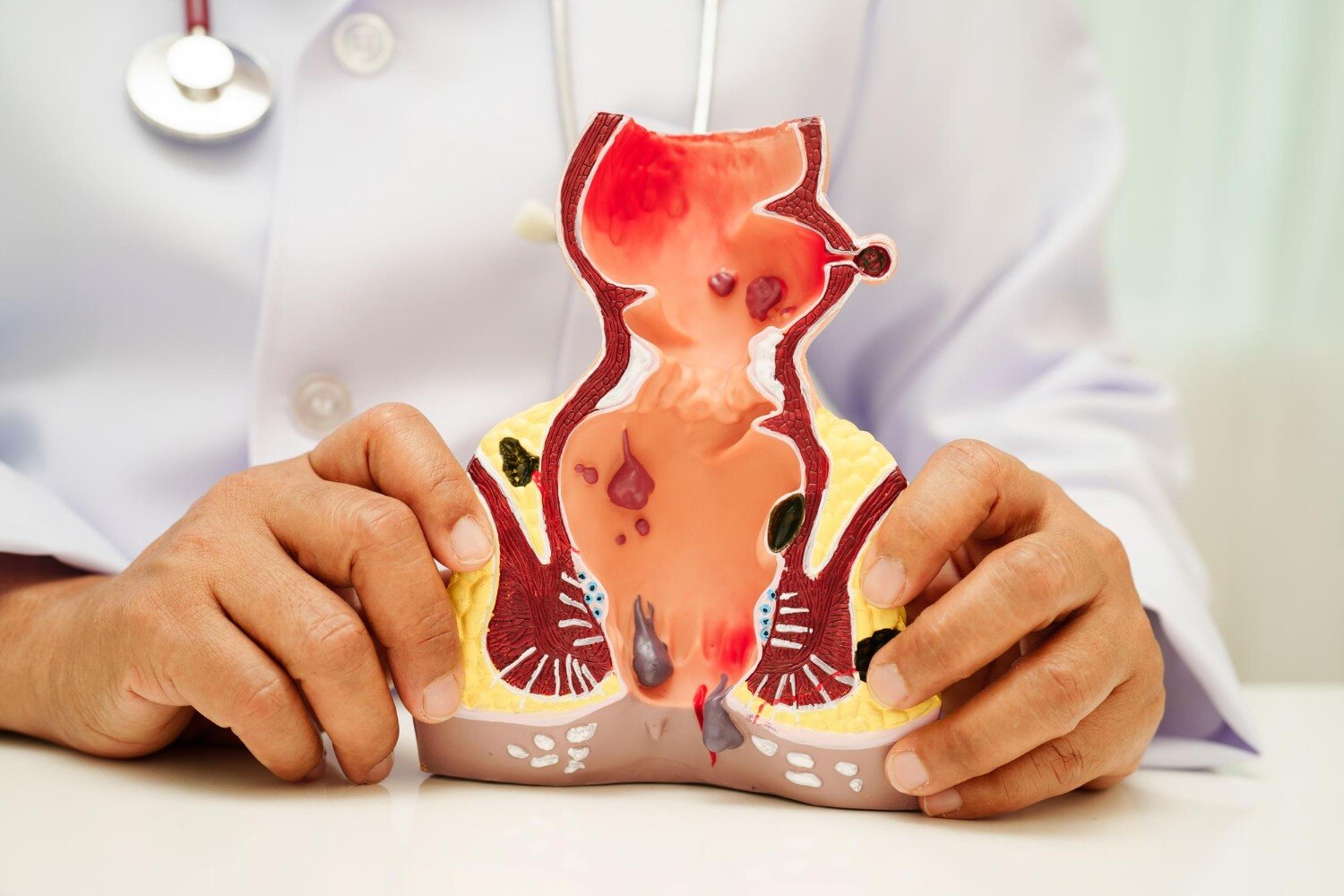
Bright-red bleeding on the toilet paper or surface of stool, itching, and a lump that prolapses during bowel movements point more towards hemorrhoids. A fissure causes sharp, cutting pain during and after passing stool, sometimes with a small streak of bright-red blood.
A fistula is an abnormal tunnel from the anal canal to nearby skin, causing a persistent opening, pus-like drainage, repeated swelling, or recurrent abscesses.
Seek urgent assessment for:
- Heavy or persistent rectal bleeding, dizziness, or fainting
- Fever, spreading redness, or rapidly increasing anal swelling
- Severe or escalating pain, especially with a tender lump
- Inability to pass urine or stool
- Vomiting or inability to keep fluids down
An abscess needs prompt drainage; antibiotics alone do not empty the collection. Do not assume every lump or bleeding episode is hemorrhoids. Arrange medical review if bleeding accompanies weight loss, altered bowel habits, anaemia, or a family history of colorectal cancer.
A clinician distinguishes these conditions through the symptom pattern and examination before discussing hemorrhoid surgery and fistula care in Nagpur. Persistent drainage or renewed pain after treatment also needs review, even when an open wound is expected to heal gradually.
How does a surgeon confirm the cause of bleeding or drainage?
Bleeding or drainage is confirmed by history and a focused anorectal examination, not by assuming piles. The surgeon asks about bleeding colour and amount, pain, lump, fever, previous abscesses, bowel changes, weight loss and family history of colorectal cancer, then examines:
- The skin around the anus for an external opening, redness, swelling, pus, scars or a recurrent abscess.
- The anal canal and rectum by digital rectal examination, checking tenderness, masses and sphincter tone.
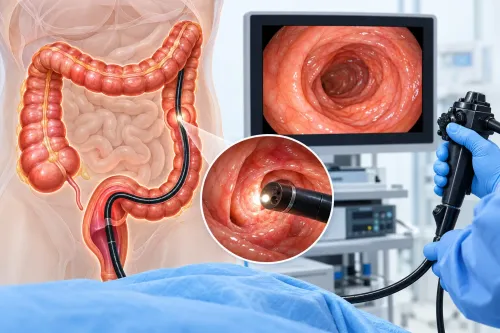
- The lower rectum with an anoscope, a short lubricated instrument that shows internal hemorrhoids, bleeding points and the anal lining.
Anoscopy is useful when the source appears to be inside the anal canal. Persistent, heavy or unexplained bleeding can require colon evaluation because hemorrhoids can coexist with polyps, cancer or inflammatory bowel disease.
For suspected fistula, the key question is where the tunnel runs in relation to the anal sphincter. A straightforward, clearly visible tract may need no scan. MRI pelvis or endoanal ultrasound helps map complex, recurrent, branching, high or Crohn’s-related fistulas.
Examination under anaesthesia allows a careful internal and external assessment when pain prevents an adequate examination or the openings and tract remain unclear. This mapping guides fistula treatment in Nagpur and protects continence.
Which hemorrhoid treatment fits the grade and symptom pattern?
Grade I–II internal hemorrhoids often improve with fibre, adequate fluids, avoiding straining, and limiting toilet sitting. If bleeding or prolapse continues, rubber-band ligation treats selected internal piles in the clinic; it does not treat external skin.
| Pattern or option | What it involves | When it fits |
|---|---|---|
| Bowel management | Fibre-rich food or fibre supplement, fluids, and softer stools | Initial care for many symptomatic internal hemorrhoids |
| Office procedure | Rubber-band ligation above the pain-sensitive area | Internal hemorrhoids with bleeding or prolapse, often grades I–II and selected grade III |
| Excisional hemorrhoidectomy | Removes the involved hemorrhoidal tissue | Large prolapsing disease, persistent symptoms, or combined internal-external hemorrhoids |
| Stapled hemorrhoidopexy or Doppler-guided artery procedure | Lifts prolapsing tissue or reduces arterial flow without removing external piles | Selected internal hemorrhoids when less early pain matters; recurrence and suitability differ |
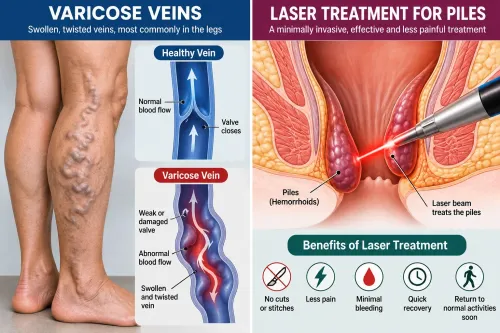
| Laser-based procedure | Uses a named laser technique to shrink or close targeted tissue | Ask for the exact method, alternatives, and long-term recurrence evidence; “laser” alone proves neither safety nor durability |
Internal hemorrhoids are assessed by bleeding, prolapse, reducibility, and examination with anoscopy. External thrombosed hemorrhoids need inspection of the painful, often bluish lump, its duration, clot, skin condition, and signs of infection; their treatment is not chosen by internal hemorrhoid grade.
Before comparing hemorrhoid surgery in Nagpur, confirm that bleeding is from hemorrhoids rather than a polyp, cancer, or inflammatory bowel disease. Persistent or unexplained bleeding needs proper anorectal assessment and sometimes colon evaluation.
How are anal fistulas treated without sacrificing continence?
Continence is protected by matching the operation to how much anal sphincter the tract crosses. Drain an abscess promptly to control infection; definitive treatment follows after the inflammation settles. Examination under anaesthesia, pelvic MRI, or endoanal ultrasound can map a high, branching, recurrent, or Crohn’s-related fistula.
- Fistulotomy: The surgeon opens the tunnel along its length. This suits a simple, low tract crossing little sphincter muscle; cutting a high tract could cause gas or stool leakage.
- Draining seton: A soft loop keeps the tract open so pus drains and infection settles. It may be temporary before a sphincter-preserving procedure, or used for complex disease.
- Advancement flap: The internal opening is covered with healthy tissue without dividing the main sphincter muscles. It is an option for selected high fistulas.
- LIFT: Ligation of the intersphincteric fistula tract closes the tunnel between sphincter layers while preserving muscle.
- Other selected procedures: Fistula plugs, fibrin glue, and video-assisted or laser techniques may reduce muscle injury, but recurrence rates vary. Ask for the exact procedure and its alternatives, not simply “laser treatment.”
Before fistulotomy, discuss continence history, previous anal surgery, sphincter injury, recurrent disease, and fistula direction. Women with anterior fistulas need particular caution because the tract can involve important muscle.
For families researching fistula treatment in nagpur, compare the proposed tract map, continence risk, recurrence plan, and follow-up; these details matter in hemorrhoid surgery and fistula care in nagpur.
What should families expect during recovery and when should they call?
Expect wound drainage after fistula or abscess surgery; the opening is often left open so it heals from the inside. A loose seton can keep draining infection, but ask whether it is temporary, part of staged treatment, or intended to remain permanently.
After hemorrhoidectomy, soreness, swelling, minor bleeding, difficulty passing urine, and short-term bowel changes are common. Take only the prescribed pain relief, drink fluids, keep stools soft as instructed, and arrange help with meals, transport, children, and bathroom care for the first few days. Do not strain or sit on the toilet for long periods.
Keep the scheduled review, even if you feel better. Persistent drainage, a new lump, or a skin opening that closes while pain returns can indicate recurrent infection. A piles surgeon in Nagpur should give you written instructions and a direct contact route.
Call the surgical team promptly for:
- Heavy or persistent bleeding, dizziness, or fainting
- Fever, spreading redness, rapidly increasing swelling, or worsening pain
- Inability to pass urine or stool
- Repeated vomiting or inability to keep fluids down
What should you ask a surgeon before choosing treatment in Nagpur?
Before consenting, ask for the diagnosis, proposed procedure, alternatives, continence risk, recurrence plan, and follow-up schedule in writing. A piles surgeon in Nagpur, including Dr Hemant Chhajed Surgeon, should explain why the plan fits you—not simply call it “laser.”
- What confirmed the diagnosis, and what finding would change it?
- For hemorrhoid surgery in Nagpur, can fibre, bowel changes, rubber-band ligation, or another option work first?
- For a fistula, where is the tract relative to the sphincter? Would you need examination under anaesthesia or MRI?
- Could cutting muscle affect gas or stool control, and what sphincter-sparing option exists?
- Is a seton drainage only, staged treatment, or permanent management? What symptoms require an earlier review?
| Option | Compare | Ask about |
|---|---|---|
| Bowel or office care | Less invasive, not suitable for every prolapse | Expected durability |
| Hemorrhoid procedure | Laser is not automatically safer or longer-lasting | Recurrence evidence |
| Fistula operation | Cure versus continence protection | Wound review schedule |
Related services
Expertise ₹500 Laser treatment is an out-patient and less-invasive(कम आक्रामक) laparoscopic procedure. View service → |
Expertise ₹500 Piles, are a common condition that affects millions of people worldwide. View service → |
Frequently asked questions
How can you tell hemorrhoids, a fissure, and a fistula apart?
Hemorrhoids often cause bright-red bleeding, itching, or a prolapsing lump. A fissure causes cutting pain during and after stool. A fistula causes persistent drainage, recurrent swelling, or an opening near the anus.
How does a surgeon confirm the cause of bleeding or drainage?
The surgeon reviews your symptoms, inspects the area, performs a digital rectal examination when appropriate, and may use anoscopy. Recurrent drainage or a complex fistula may require MRI or examination under anaesthesia.
Which hemorrhoid treatment fits the grade and symptom pattern?
Mild internal hemorrhoids often respond to fibre, fluids, stool-softening habits, or outpatient procedures. Advanced prolapse, persistent bleeding, or external disease may require an operation chosen after examination.
How are anal fistulas treated without sacrificing continence?
Treatment depends on how much sphincter muscle the tract crosses. A surgeon may use fistulotomy for a suitable simple tract or a sphincter-sparing method, such as a seton, advancement flap, or LIFT procedure, for higher-risk anatomy.
When should you call after hemorrhoid or fistula treatment?
Call your surgical team for fever, increasing swelling or pain, heavy bleeding, pus, inability to pass urine, or loss of bowel control. Follow the discharge instructions for dressing changes, pain relief, and bowel movements.
Related service
LASER TREATMENT FOR HEMORROIDS Laser treatment for piles (hemorrhoids) ₹500 1) Consultation . 2) LASER TREATMENT FOR HEMORROIDS. 3) SCLEROTHERAPY FOR HEMORROIDS View service → |
Keywords