A new lump after uterus-removal surgery can come from the old incision, but it can also be scar tissue, fluid, infection, or another abdominal-wall problem. You will learn how to identify warning signs, prepare for an examination, compare observation with repair, and ask better questions about mesh and surgical approach.
Key takeaways
- A hernia can develop at an abdominal incision or laparoscopic port site.
- Sudden pain, vomiting, or a firm unreducible bulge needs urgent assessment.
- Consultation includes examining the scar, bulge, symptoms, and prior operation records.
- Repair choice depends on hernia size, location, health, and previous surgical scars.
Which hysterectomy scars can develop an incisional hernia?
A previous hysterectomy does not automatically cause an incisional hernia. The risk comes from weakness in an abdominal incision or port site, not from uterus removal itself. A bulge can appear months or years later, even after an initially smooth recovery.
| Route of hysterectomy | Possible hernia site | Key point |
|---|---|---|
| Open abdominal hysterectomy | Lower midline or Pfannenstiel incision | The abdominal fascia was opened and closed. |
| Laparoscopic or robotic hysterectomy | Umbilical camera port or another port site | A larger port or inadequate fascial closure increases risk. |
| Vaginal hysterectomy | No usual abdominal site | It has no abdominal incision, so it does not usually create an abdominal incisional-hernia site. |
Risk depends on the incision, fascial closure, wound infection, healing quality, obesity, smoking, diabetes, malnutrition, immunosuppression, chronic cough, constipation, and whether the operation was emergency or contaminated. The swelling may contain fat or bowel and often becomes clearer when standing, coughing, or straining.
A broad one-third figure cannot predict your personal risk or urgency after uterus-removal surgery. Route, scar location, complications, and time since surgery require individual assessment.
Someone searching for incisional hernia for uterus removal history in Nagpur should remember that uterus removal surgery in Nagpur includes different surgical routes; a new lump still needs examination rather than assumption.
How can you tell a hernia from another lump, and when is it urgent?
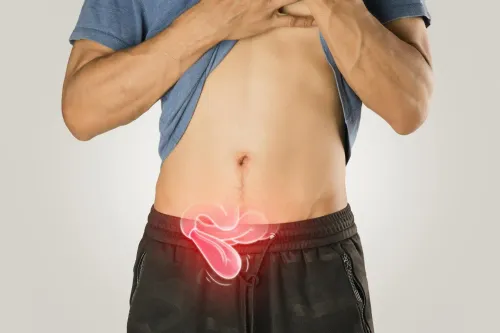
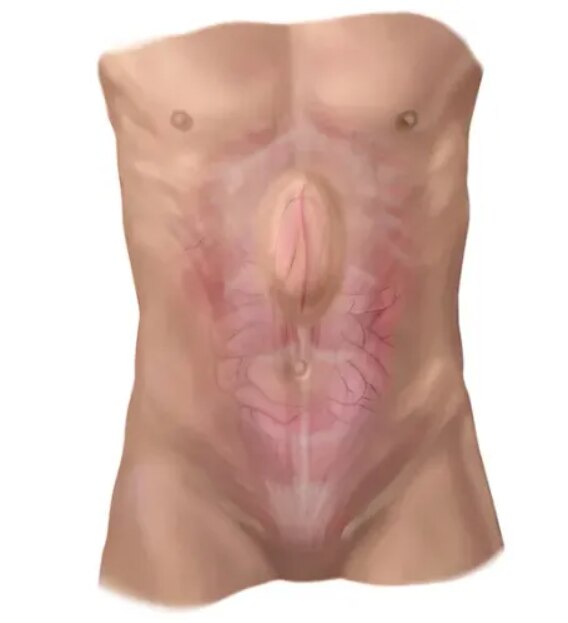
A hernia usually causes a swelling along the old abdominal scar or around the navel. It becomes more prominent when you stand, cough, lift, or strain, may cause discomfort during activity, and often reduces or disappears when you lie down.
A new lump is not automatically an incisional hernia. Examination may be needed to distinguish it from scar tissue, seroma, hematoma, suture granuloma, abscess, lipoma, abdominal-wall endometriosis, nerve-related pain, or recurrent pelvic disease. For incisional hernia care in Nagpur, arrange assessment even when the swelling is painless, especially if it is growing or repeatedly returns.
Go to a hospital urgently rather than waiting for a routine appointment if you have:
- Sudden severe or persistent abdominal pain
- Vomiting or increasing abdominal swelling
- Inability to pass stool or gas
- Fever or skin colour change over the lump
- A firm, tender bulge
- A swelling that cannot be pushed back when you are lying down
These signs can indicate incarceration, where tissue is trapped, or strangulation, where its blood supply is threatened. Do not keep pressing a painful, firm swelling or delay care to monitor it at home. Take your previous operation details and medication list if this is safe, but do not postpone hospital assessment to gather records.
What happens during an incisional hernia consultation?
1. The surgeon starts with the hysterectomy history: open, laparoscopic, robotic, or vaginal route; incision location; operation date; wound infection; reoperation; recovery; and current symptoms. Tell them about any previous hernia repair and whether mesh was inserted.
2. Examination begins with inspection and palpation while you stand, cough, strain, and lie down. The surgeon assesses the defect’s size, tenderness, whether the swelling reduces when lying down or with gentle pressure, and whether bowel could be inside the sac.
3. Ultrasound helps when a superficial lump is uncertain or difficult to feel. CT of the abdomen and pelvis gives better mapping when obesity, a deep or recurrent defect, multiple suspected defects, possible bowel involvement, or complex operative planning makes examination insufficient.
4. Take these records to an incisional hernia consultation in nagpur:
- Hysterectomy operative report and discharge summary
- Previous scan reports and the actual images
- Medication list
- Diabetes records or recent glucose results
- Details of wound infection, poor healing, or reoperation
- Records of earlier hernia repair, including mesh type and position
Ask: “How large is the defect?” “Is bowel involved?” “Will repair be open, laparoscopic, or robotic?” “Where will the mesh sit?” “Will you close the fascial gap?” Also clarify lifting and work restrictions, recurrence and infection risks, and what happens if bowel injury or an unexpected bowel finding occurs.
When is watchful waiting reasonable, and when is repair more appropriate?
A small, reducible hernia causing little or no discomfort can be observed after a surgeon examines it. Observation does not close the fascial defect, so arrange reassessment if the swelling changes.
| Option | What it means | When it fits |
|---|---|---|
| Watchful waiting | Monitor symptoms and size without immediate surgery | Small, reducible, minimally symptomatic hernia after individual assessment |
| Elective repair | Planned closure of the defect, usually with reinforcement chosen for the anatomy | Increasing pain, enlargement, repeated difficulty reducing the swelling, bowel symptoms, skin changes, or limits on work and daily activity |
Obesity, smoking, uncontrolled diabetes, poor nutrition, chronic cough, constipation, steroid treatment, and anticoagulants can increase wound, respiratory, bleeding, infection, or recurrence risks. Improve these factors before repair when possible; doing so does not cure the hernia.
A planned future abdominal procedure can also change the timing, because combining operations or avoiding a second entry may affect the repair plan.
The hysterectomy route, wound infection, and time since surgery do not create a personal repair timetable without examination. Bring the operative note, discharge summary, scans, and wound-complication details to an incisional hernia consultation in Nagpur.
Dr Hemant Chhajed Surgeon can be considered when you want these individual factors reviewed rather than relying on a general risk figure. This is also the practical basis of incisional hernia care in Nagpur.
How do open, laparoscopic, and robotic repairs differ?
Open, laparoscopic, and robotic repairs differ mainly in access, dissection, and mesh position—not in a universal ranking. Contemporary repair commonly closes the fascial defect and places mesh in a retromuscular, preperitoneal, or another well-vascularized plane when anatomy permits.
| Option | What it involves | Main trade-off or fit |
|---|---|---|
| Open | Direct access through an incision; fascial closure and mesh placement under vision | Suits very large, complex, recurrent, or loss-of-domain hernias, but creates a larger wound |
| Laparoscopic | Small ports, camera-guided dissection, and mesh placement | May reduce wound complications in selected patients, but adhesiolysis, bowel injury, and intraperitoneal mesh matter |
| Robotic | Port-based repair with wristed instruments and enhanced control | May help with complex suturing or retromuscular dissection, but technical limits, availability, and added operative complexity matter |
Intraperitoneal mesh can support a minimally invasive repair, but it places prosthetic material near bowel. Retromuscular or preperitoneal mesh separates it from bowel, although reaching those planes can require more extensive dissection.
Ask why the proposed method fits your defect’s size and location, prior mesh, contamination risk, and future abdominal-procedure plans. This matters when researching incisional hernia for uterus removal history in Nagpur or arranging incisional hernia care in Nagpur.
Clarify recovery details:
- Lifting restrictions and wound care
- Return-to-work timing
- Mesh infection and recurrence risks
- What happens if bowel is found in the sac or is injured during adhesiolysis
Frequently asked questions
Which hysterectomy scars can develop an incisional hernia?
Hernias can develop in the lower abdominal scar from an open hysterectomy or at laparoscopic port sites. The risk comes from weakness in the abdominal wall incision, not from uterus removal itself.
How can you tell a hernia from another lump, and when is it urgent?
A hernia often appears as a bulge near a scar that becomes more noticeable when you stand, cough, or strain. Seek urgent assessment for severe or increasing pain, vomiting, abdominal swelling, skin discolouration, or a firm bulge that does not go back in.
What happens during an incisional hernia consultation?
The surgeon reviews your hysterectomy and other abdominal operations, examines the scar while you stand and strain, and assesses whether the lump is reducible. Imaging such as an ultrasound or CT scan may be requested when the diagnosis or repair plan is unclear.
When is watchful waiting reasonable, and when is repair more appropriate?
Watchful waiting can suit a small, comfortable hernia that does not limit daily activity. Repair becomes more appropriate when the bulge causes pain, enlarges, restricts movement, or creates concern about bowel obstruction or entrapment.
How do open, laparoscopic, and robotic repairs differ?
Open repair uses one incision over the hernia. Laparoscopic repair uses several small ports and a camera. Robotic repair uses similar small access points with instruments controlled from a console; the suitable approach depends on the hernia and your surgical history.
Keywords