An inguinal hernia develops in the groin when abdominal tissue pushes through a weak point in the lower abdominal wall. It may cause a visible bulge, dragging sensation or discomfort during walking, coughing and lifting.
Inguinal hernias do not heal through medicines or exercise. When surgery is advised, patients often need to choose between open and laparoscopic repair. Dr Hemant Chhajed considers the type of hernia, symptoms, previous operations and individual recovery needs before recommending an approach.
How Open Inguinal Hernia Repair Works
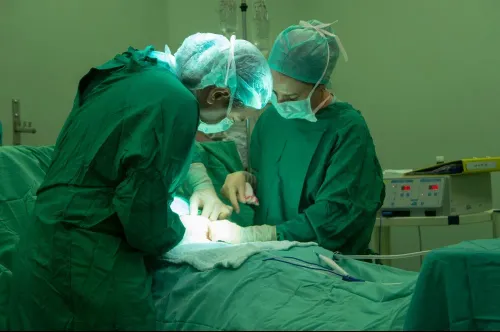
Open surgery is performed through an incision in the groin. The protruding tissue is placed back in the abdomen, and the weakened area is repaired, commonly with mesh reinforcement.
Open repair may be suitable for:
- A first-time hernia on one side
- Large hernias extending into the scrotum
- Patients unsuitable for general anaesthesia
- Certain complicated or emergency hernias
- Cases where previous surgery affects laparoscopic access
The technique offers direct access to the affected area. Recovery depends on the extent of the repair and the physical demands of the patient’s work.
How Laparoscopic Repair Is Different
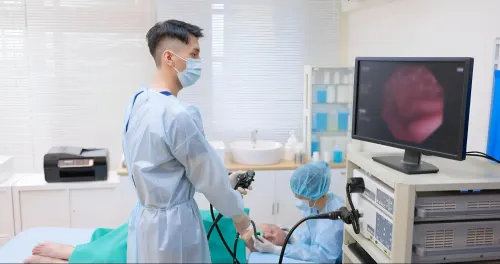
Laparoscopic inguinal hernia surgery is performed through small abdominal incisions using a camera and specialised instruments. The weakened groin area is repaired from inside, usually with mesh.
This approach may be particularly useful for:
- Hernias on both sides
- Recurrent hernias after earlier open surgery
- Patients seeking an earlier return to selected activities
- People with suitable anatomy and medical fitness
Laparoscopic repair generally requires general anaesthesia. It may not be appropriate in every case, especially when there are significant abdominal adhesions or certain medical concerns.
Comparing Hernia Repair Options in Nagpur
Patients evaluating inguinal hernia surgery in Nagpur, Maharashtra, should avoid choosing solely according to incision size. The quality and durability of repair depend on correct diagnosis, sound technique, appropriate mesh placement and proper recovery.
Key differences to discuss include:
- Anaesthesia: Open repair may sometimes use regional or local anaesthesia, while laparoscopic repair generally uses general anaesthesia.
- Incisions: Open surgery uses one groin incision; laparoscopic surgery uses several small abdominal incisions.
- Bilateral repair: Both groins can often be treated through the same laparoscopic access.
- Previous repair: A different tissue plane may be preferred when repairing a recurrent hernia.
- Recovery: Activity timelines vary according to the method, job requirements and individual healing.
When Should Surgery Not Be Delayed?
A groin hernia needs urgent evaluation if the swelling becomes suddenly painful, hard or impossible to push back. Vomiting, abdominal swelling, fever or inability to pass stool or gas may indicate trapped or obstructed bowel.
Planned repair is generally safer and more predictable than waiting until an emergency develops.
Supporting a Strong Recovery
Patients should follow lifting restrictions, prevent constipation and gradually resume activity. Walking is generally helpful, but gym exercise and heavy manual work should restart only after medical clearance.
Neither technique can guarantee that a hernia will never recur. Smoking, obesity, chronic cough and repeated straining can continue to place pressure on the repair.
The right choice is the procedure best suited to the patient’s hernia and health—not simply the newest technique.
To compare open and laparoscopic inguinal hernia repair for your condition, arrange an evaluation with Dr Hemant Chhajed.
Keywords