Not every case of haemorrhoids requires surgery. Many people improve by increasing dietary fibre, drinking more water, correcting toilet habits and using prescribed medicines. Hemorrhoid surgery is generally considered when symptoms are severe, recurring or unlikely to respond adequately to conservative treatment.
Dr Hemant Chhajed assesses the extent of the condition, the frequency of bleeding and the effect of symptoms on everyday life before discussing surgical options. This helps avoid both unnecessary procedures and prolonged delays in cases that need definitive treatment.
Signs That May Lead to Surgical Evaluation
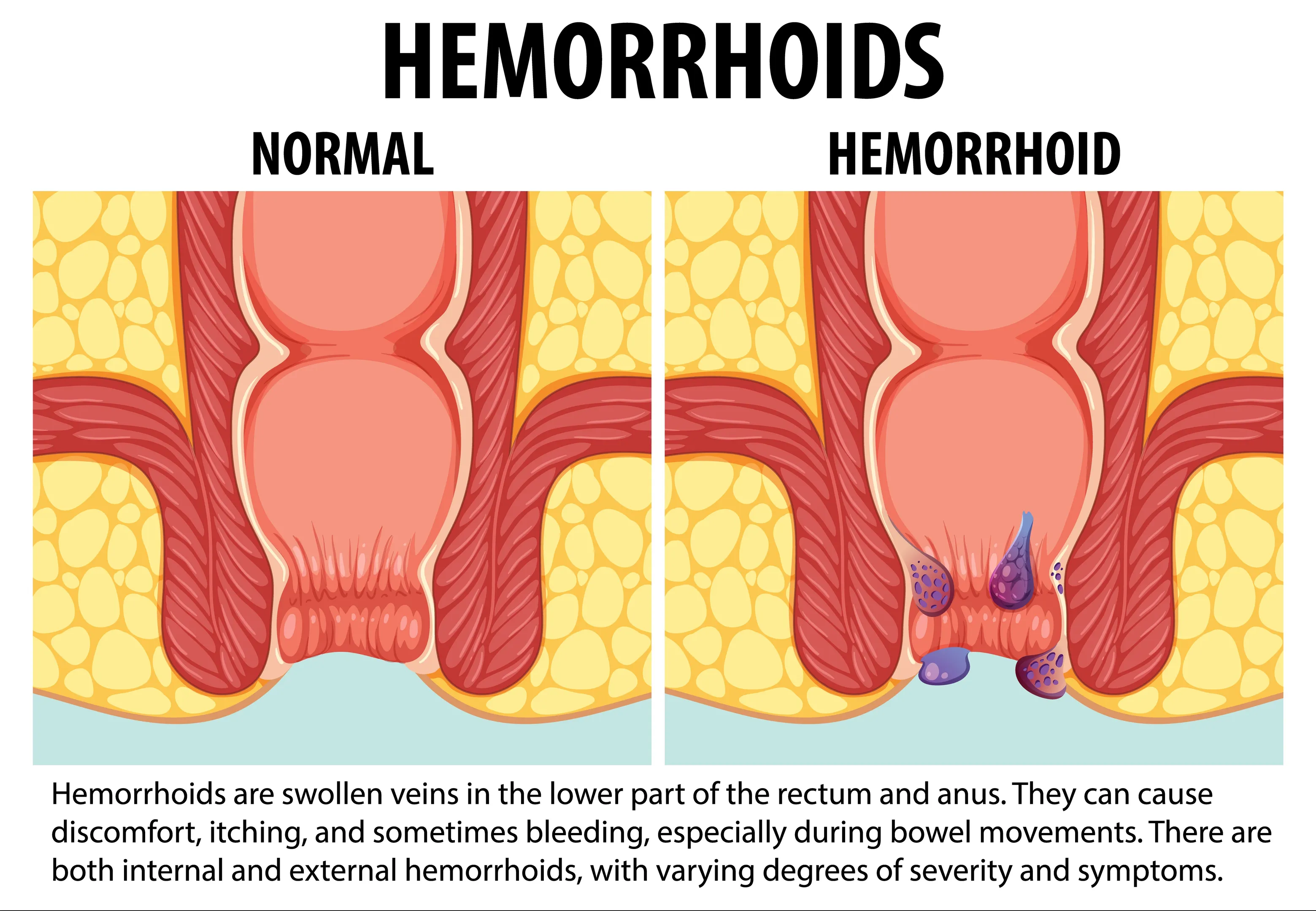
Haemorrhoids are commonly classified according to their position and degree of prolapse. Small internal piles may bleed without coming outside, while advanced piles may protrude during bowel movements or remain outside the anal opening.
A surgical opinion may be appropriate when a patient experiences:
- Repeated or significant rectal bleeding
- Prolapsed piles that require manual reduction
- Haemorrhoids that remain outside
- Persistent pain or irritation
- Recurrent clot formation in external piles
- Difficulty maintaining hygiene
- Symptoms returning after earlier treatment
- Limited improvement with medicines and lifestyle changes
Bleeding should never be assumed to be from piles without an examination. Anal fissures, polyps, inflammation and bowel disorders can produce similar symptoms.
What Does Hemorrhoid Surgery Involve?
Hemorrhoid surgery is not a single procedure. The appropriate technique depends on the size, location and grade of the haemorrhoids.
A conventional haemorrhoidectomy removes the enlarged tissue and may be recommended for large external piles or advanced internal piles. Other methods may reduce blood flow to the haemorrhoids, reposition prolapsed tissue or shrink the affected area.
The surgeon may consider:
- Whether the piles are internal or external
- The number and size of haemorrhoids
- The presence of prolapse
- Previous procedures
- Current medicines
- Diabetes or other medical conditions
- The patient’s occupation and recovery needs
Preparing for Hemorrhoid Surgery in Nagpur
Before undergoing hemorrhoid surgery in Nagpur, Maharashtra, patients may need routine blood tests, anaesthesia assessment and instructions regarding food, medicines and bowel preparation. Blood-thinning medicines should only be adjusted according to medical advice.
Patients should also discuss practical concerns such as expected discomfort, wound care, time away from work and when normal physical activity can resume. Clear preparation makes the recovery period more manageable.
Recovery and Bowel Care
Pain during the first few bowel movements is a common concern. Prescribed pain relief, stool-softening measures and warm sitz baths may help, depending on the procedure performed.
Recovery usually focuses on preventing hard stools and unnecessary pressure on the healing area. Helpful habits include:
- Gradually increasing fibre intake.
- Drinking enough fluids unless medically restricted.
- Avoiding prolonged sitting on the toilet.
- Responding to the natural urge to pass stool.
- Resuming walking and light activity as advised.
- Avoiding heavy lifting until cleared.
Heavy bleeding, fever, increasing pain, difficulty urinating or inability to pass stool requires prompt attention.
Hemorrhoid surgery can provide lasting relief in appropriately selected cases, but surgery is only one part of treatment. Long-term comfort also depends on correcting constipation, reducing straining and maintaining consistent bowel habits.
Keywords